
Three Kids, One Fire, No Screens: A Private Family Survival Day on Pulau Ubin
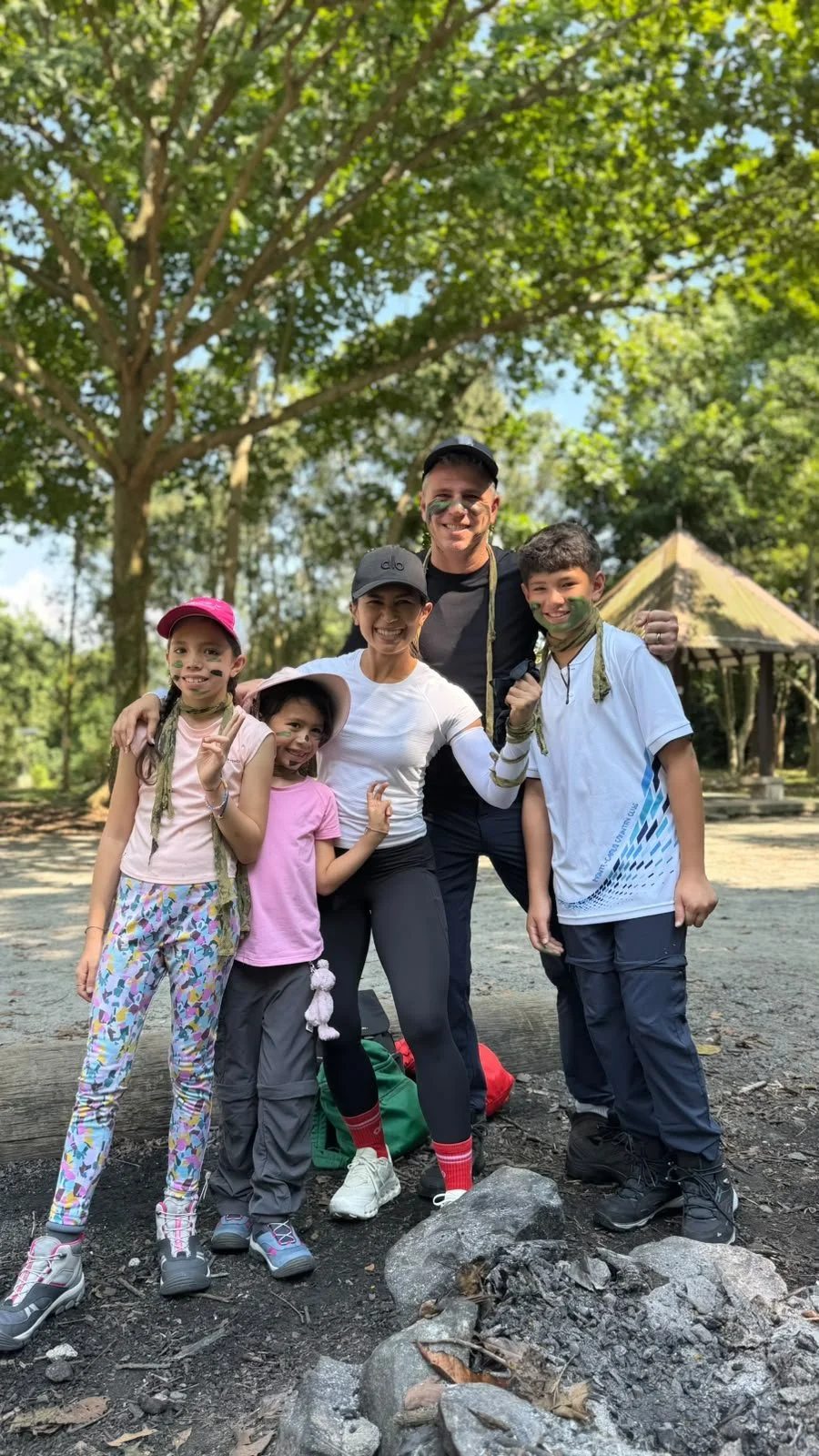
Five people arrived for a day out. By the time the face paint was on, they looked a lot more like a small expedition crew.
By the time the face paint went on, things had got serious.
There was a fire to start. Water to figure out. Timber to cut. A shelter to build, and a strong incentive to build it properly.
And judging by the dirt already worked into five sets of fingernails, there was no chance this family was going home looking the way they had arrived.
Which was more or less the plan.
They had first come across our Pulau Ubin bushcraft experience through a feature by TheSmartLocal, and got in touch because it looked like something all five of them would genuinely enjoy doing together.
We had been asked to put together a private survival day on Pulau Ubin for a Singapore-based family of five: two parents, three siblings, ranging from younger-child to pre-teen. Which sounds straightforward right up until you sit down to design it and realise you are not building one day. You are building three, they all have to happen in the same clearing at the same time, and nobody can be bored or talked down to.
That is the actual job in family adventure. The fire is the easy part.
Fourteen seconds of the day: sparks, sawdust, lunch on the coals, and a short rope line making its way back out of the trees.
THE BRIEF: “VERY HANDS-ON, PLEASE”
Mum and dad came to us with something refreshingly specific. They wanted their kids’ hands on real things. Games rather than lectures. Fire-making. Something about finding and understanding water. Survival scenarios, the “what would you actually do if you got lost?” kind. Enough genuine challenge to hold the attention of the oldest. Enough adventure and mess to thrill the younger two.
And this is the bit that quietly shaped everything: skills the parents could learn too. Not supervise. Learn.
That last request is more unusual than it should be. Most children’s outdoor programmes in Singapore are built as drop-offs: the kids go in, the adults go for coffee, everyone reconvenes at pickup. There is nothing wrong with that model. But it does mean the parents miss the only part that is hard to buy anywhere else: being there at the exact second their kid gets it.
THREE KIDS DOES NOT MEAN ONE VERSION OF THE ADVENTURE
Here is the thing every parent with more than one child already knows and most activity providers politely ignore: siblings are not an age bracket. They are three separate negotiations.
One child wants to be first at everything and will announce it. One watches for a full five minutes before touching anything, then turns out to be the most methodical person present. One is small enough that the tool has to be rethought entirely, and would still like to be given something genuinely sharp, thank you.
So we did not hand out one task and three identical sets of instructions. We ran the same skill at three different depths. The youngest got the fire-lighting broken into small, winnable pieces. The middle child got the gathering and sorting job, which sounds like the consolation prize until you discover that finding dry tinder in Singapore humidity is the entire ballgame. The oldest got the version with the real saw, the real log and the real physics.
Same fire. Three completely different days. Nobody standing around holding a clipboard feeling like the spare.
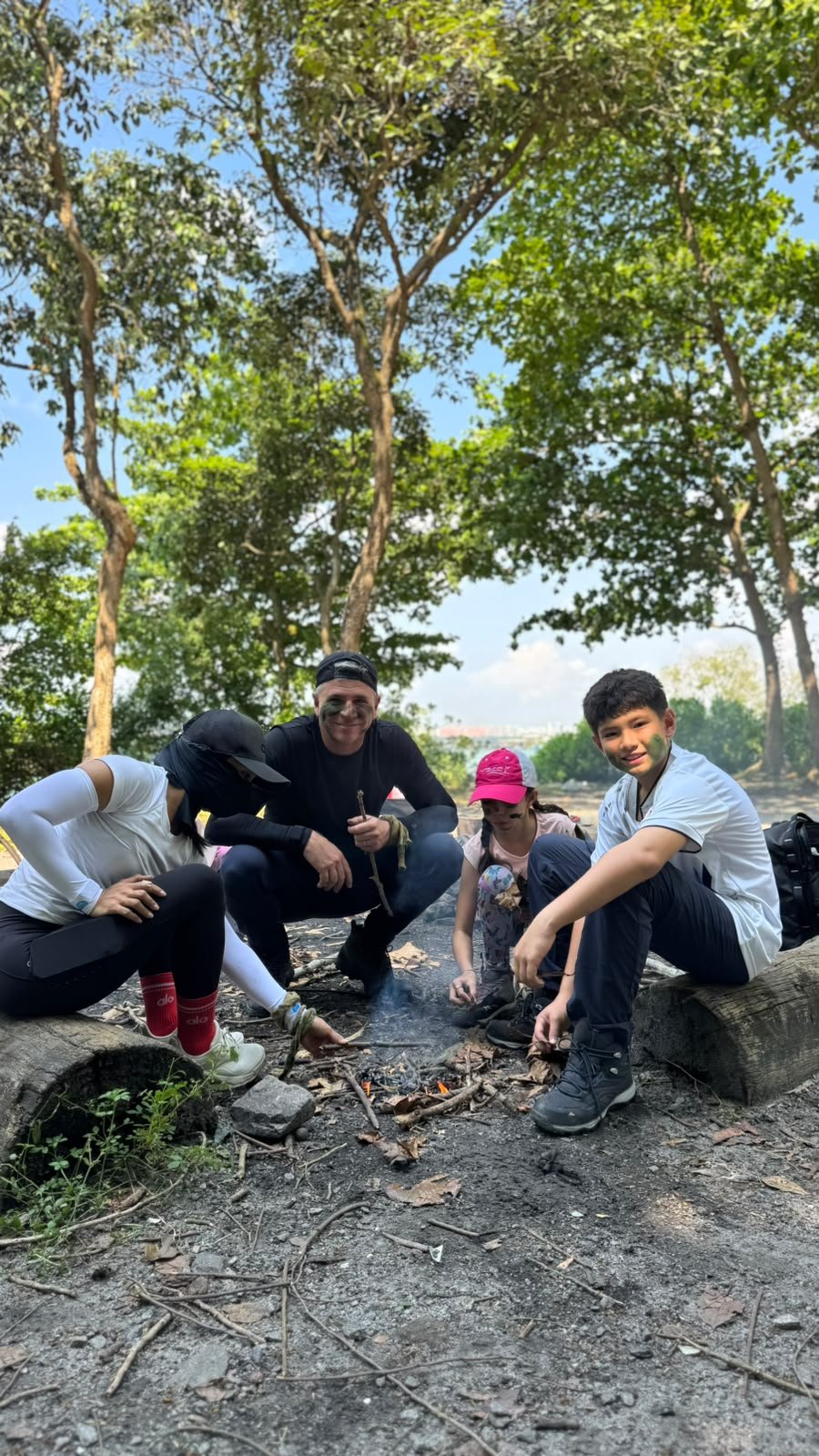
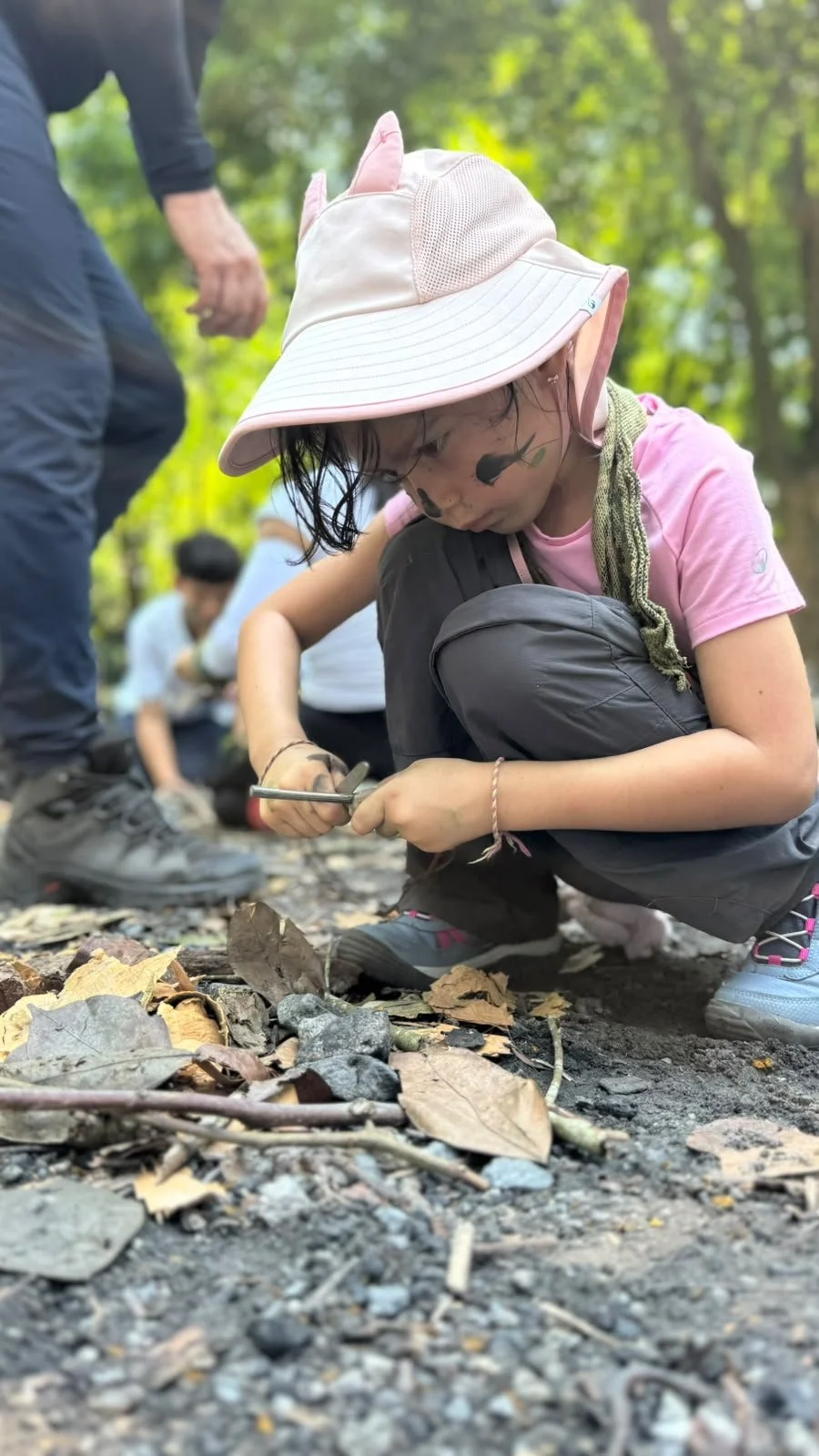
Five people around one small fire, and the youngest doing most of the actual work.
FIRE-MAKING, OR: HOW TO BE DEFEATED BY A SMALL METAL STICK
Fire-making is approximately 10% technique and 90% refusing to let a tiny piece of metal defeat you.
The youngest adventurer took the ferro rod, crouched over the tinder, and struck. Sparks: pretty ones, useless ones, sparks that landed a promising two centimetres from anything flammable. Strike again. A wisp of smoke that thought about it and changed its mind. Strike again.
We could have stepped in around attempt three. We did not, because attempt three is where the good stuff lives. You can watch a child’s technique reorganise itself in real time: the angle steepening, the stroke getting longer and more committed, the whole body leaning in. Nobody taught that. It got figured out.
When the tinder finally caught, the reaction was not a cheer. It was a very still, very focused silence, followed by the fast realisation that a flame this small needs immediate help. That is the lesson, and it arrives without anyone having to say it: you do not get a fire, you get a chance at one.
Within twenty minutes the whole family was around it, feeding it in a rhythm they had worked out between themselves, mildly smug.
Fire is where our Level 1 survival workshop starts too, for exactly this reason. It is the skill that teaches patience fastest, and it is the one everybody remembers.
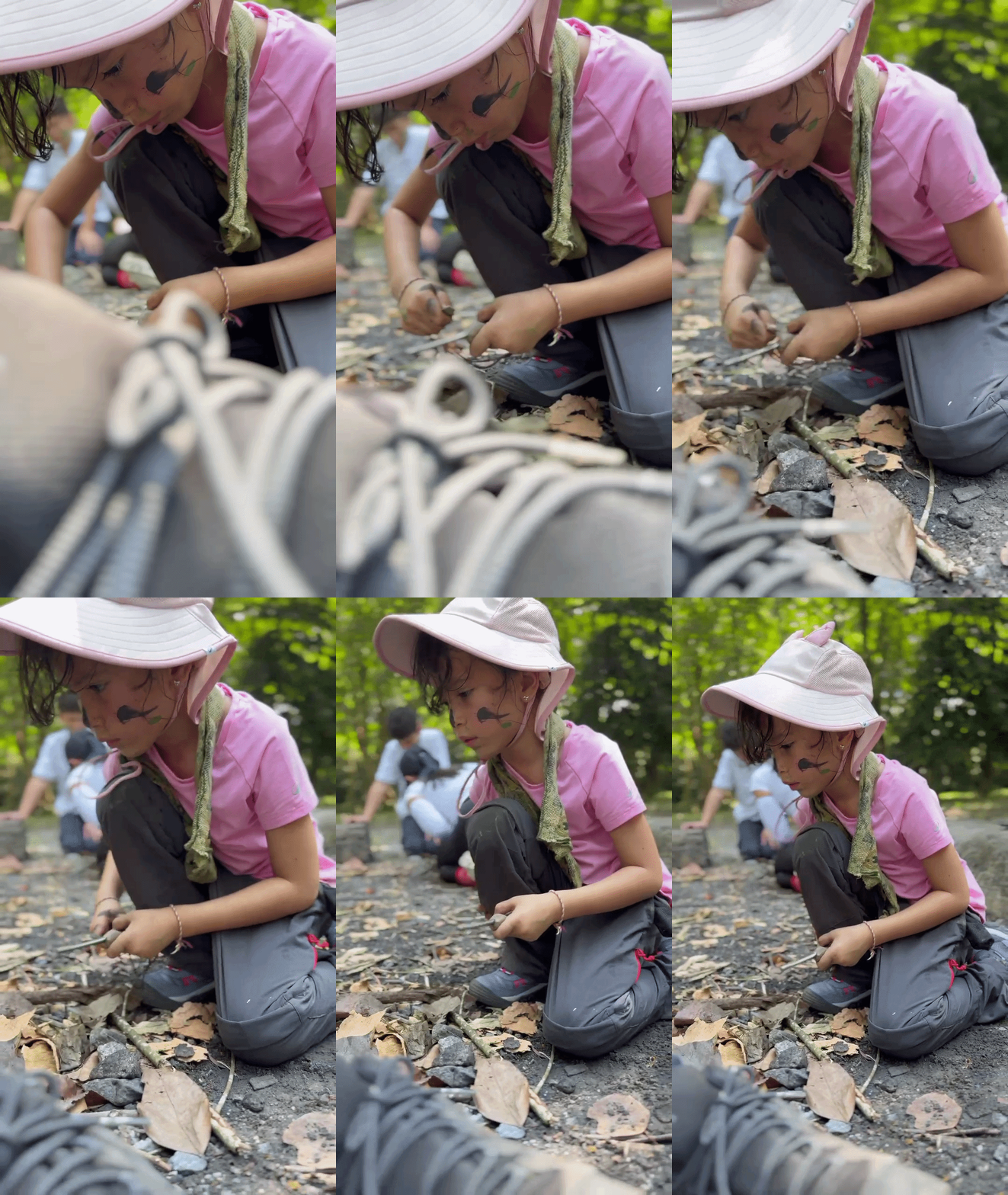
Strike, check, adjust, strike again. Nobody offered to help and nobody asked.
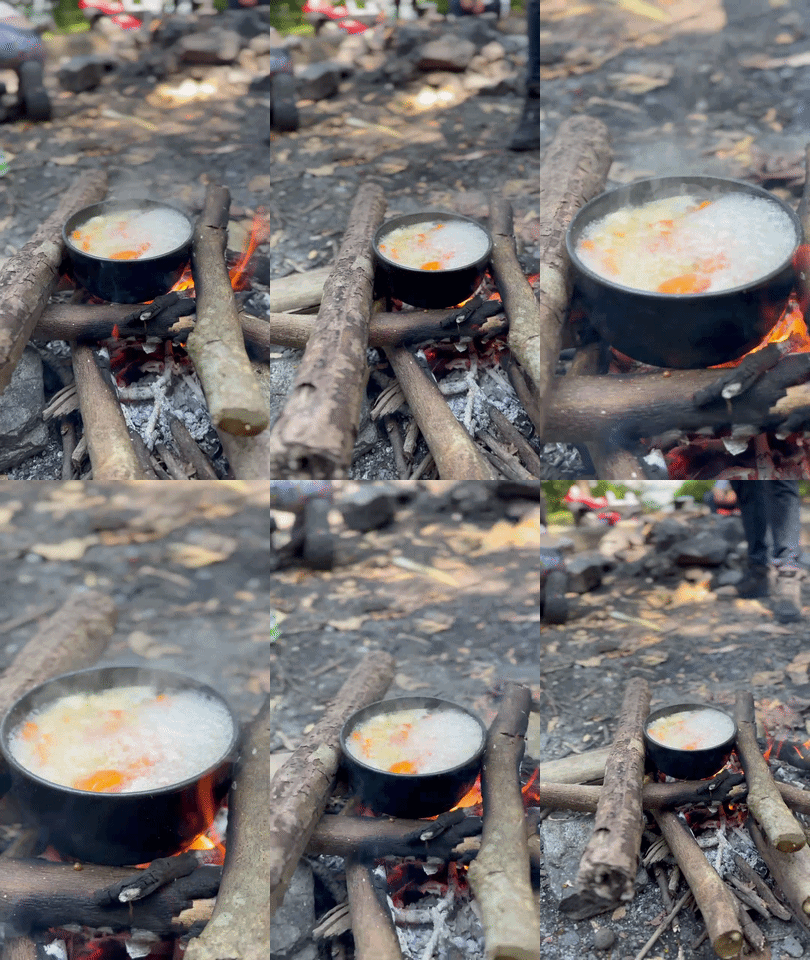
Lunch, simmering over a fire they lit themselves. Suddenly it mattered a great deal that the flame stayed alive.
THE TWEEN TEST
Older children notice immediately when an activity has been watered down for kids.
They do not complain about it. That is the trap. They just go quiet, get polite, and mentally leave. Any parent of a pre-teen has watched this happen at a birthday party and felt the specific despair of it.
So the oldest child got a folding saw, a fallen log, and a job that had to be done because the shelter needed the timber. Not a craft kit. Not a plastic approximation. A saw that cuts, a log that resists, and the honest and slightly humbling discovery that sawing is much harder than it looks when someone competent is doing it.
This is why survival skills bridge the age gap where almost nothing else does. Fire-lighting, tool use, water and shelter cannot be made childish, because the physics will not allow it. The log does not know how old you are. A twelve-year-old can be given real responsibility inside a genuinely safe, supervised structure. And being trusted with something that matters is, as far as we can tell, the thing tweens are actually starving for.
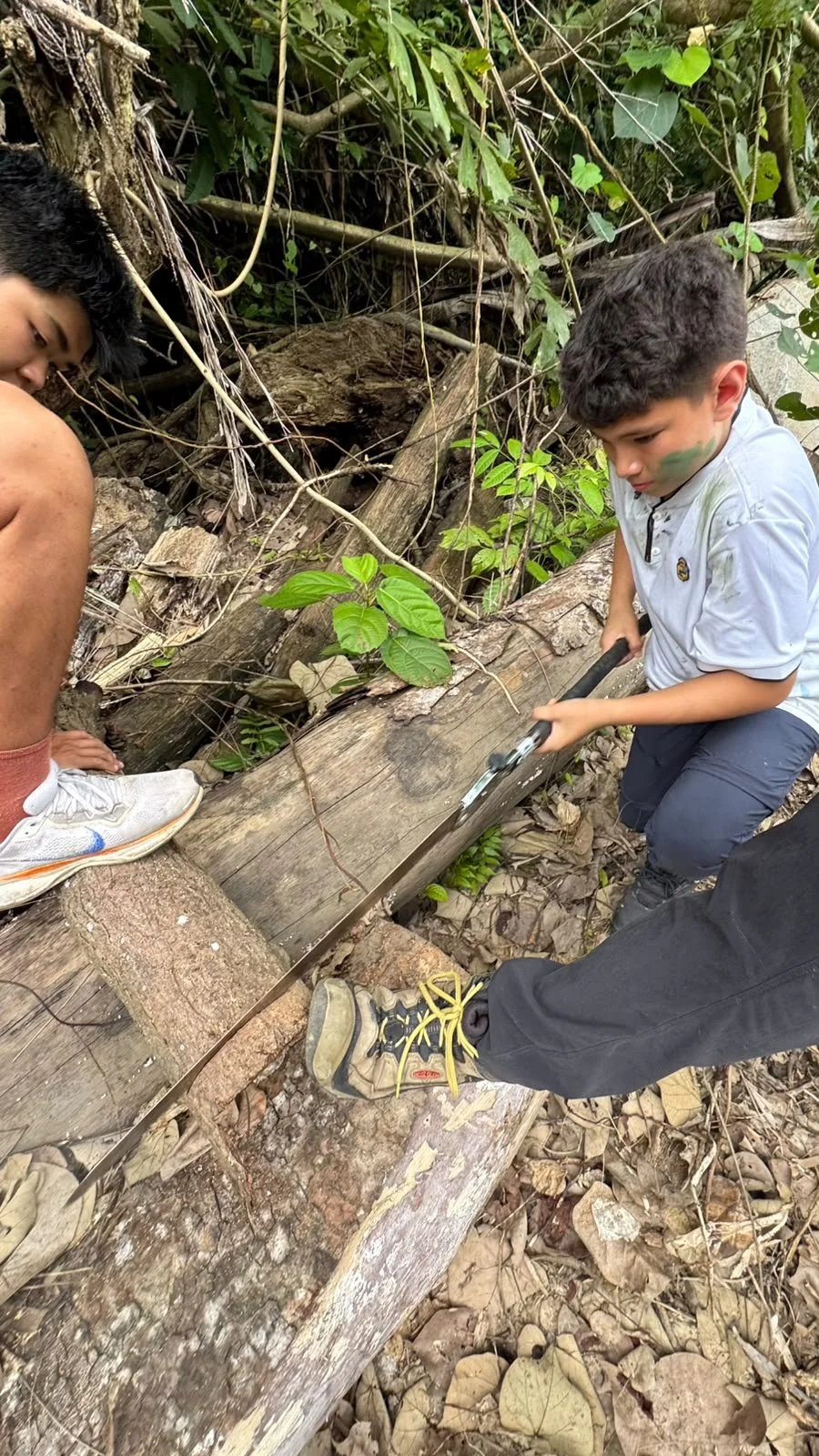
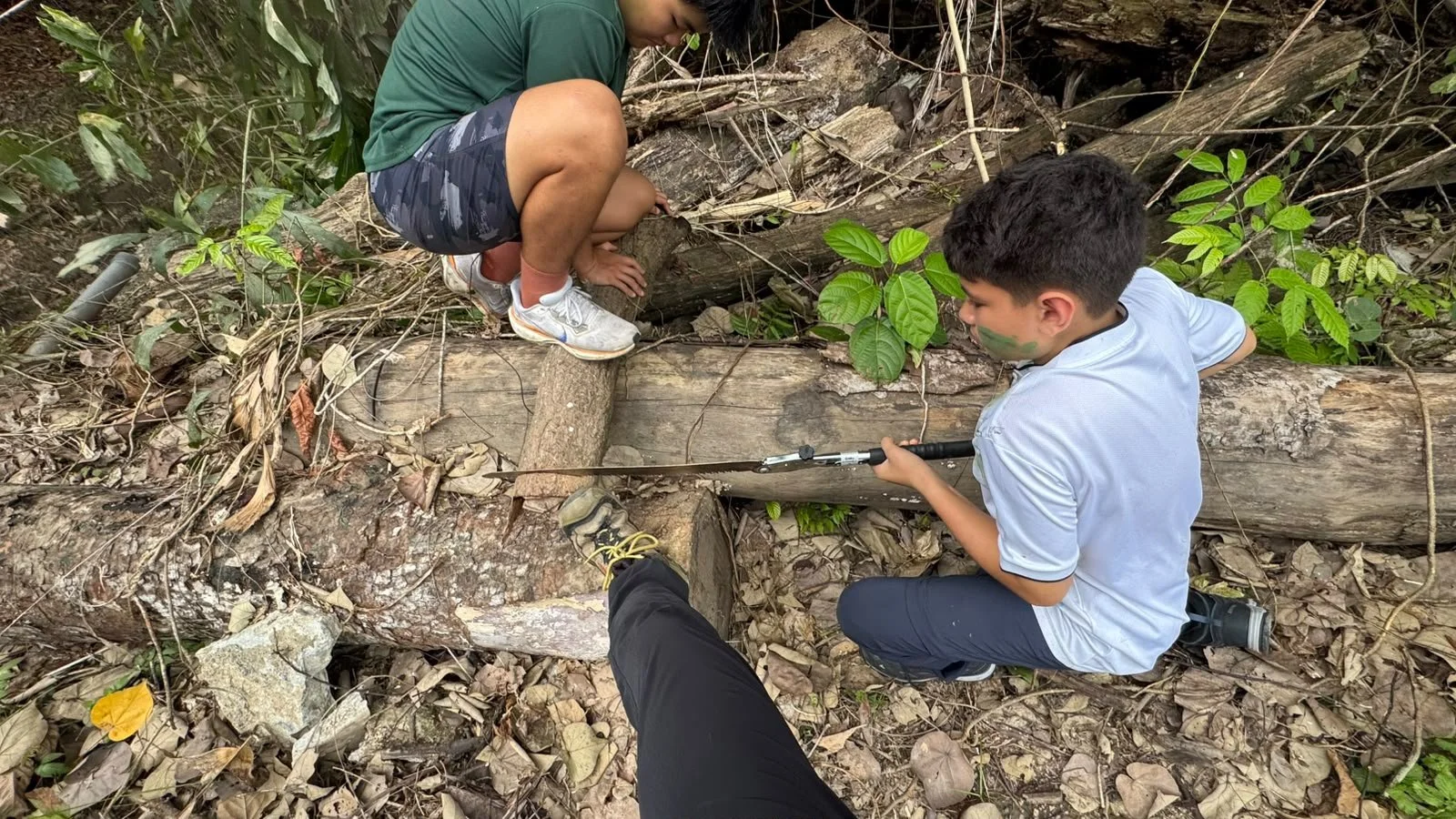
Our guide stayed exactly where he was, which is usually the most useful thing an instructor can do.
WATER, AND THE QUESTION NOBODY COULD ANSWER IMMEDIATELY
Then we asked what they would drink if the bottles ran out.
There is a useful pause that happens here. Everyone knows water is a problem. Almost nobody has thought past that sentence. So we built an improvised filter out of a cut bottle and layers of natural material, and talked through what it does, what it does not do, and why “looks clean” and “is safe” are entirely different claims.
The children were fascinated by the mechanics. The parents, we noticed, were quietly filing it away as something worth actually knowing. Which is the correct reaction: this is the one skill on the list that turns up in real life, on a hike, in a blackout, on a trip that goes sideways.
The same logic drove the lost-in-the-woods scenarios. Not to frighten anyone. To replace panic with a sequence: stop, stay put, make yourself findable, make noise, and do not wander downhill just because it feels like progress. Decision-making is a skill. It responds to practice like any other.
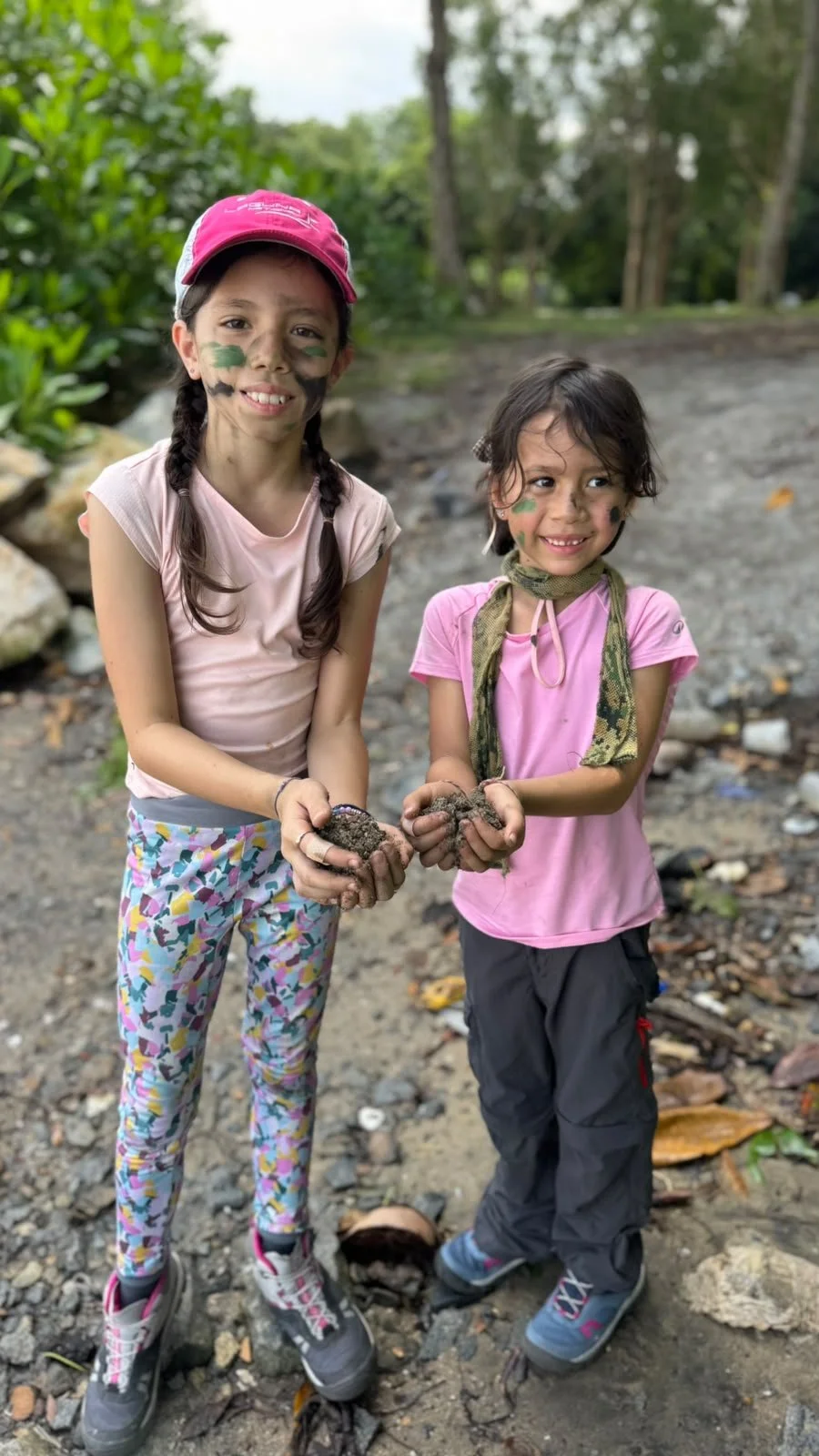
Nobody needed persuading to go and find the muddiest handful on the island.

Everyone leaned in for this one, which is usually a sign that something is genuinely working.
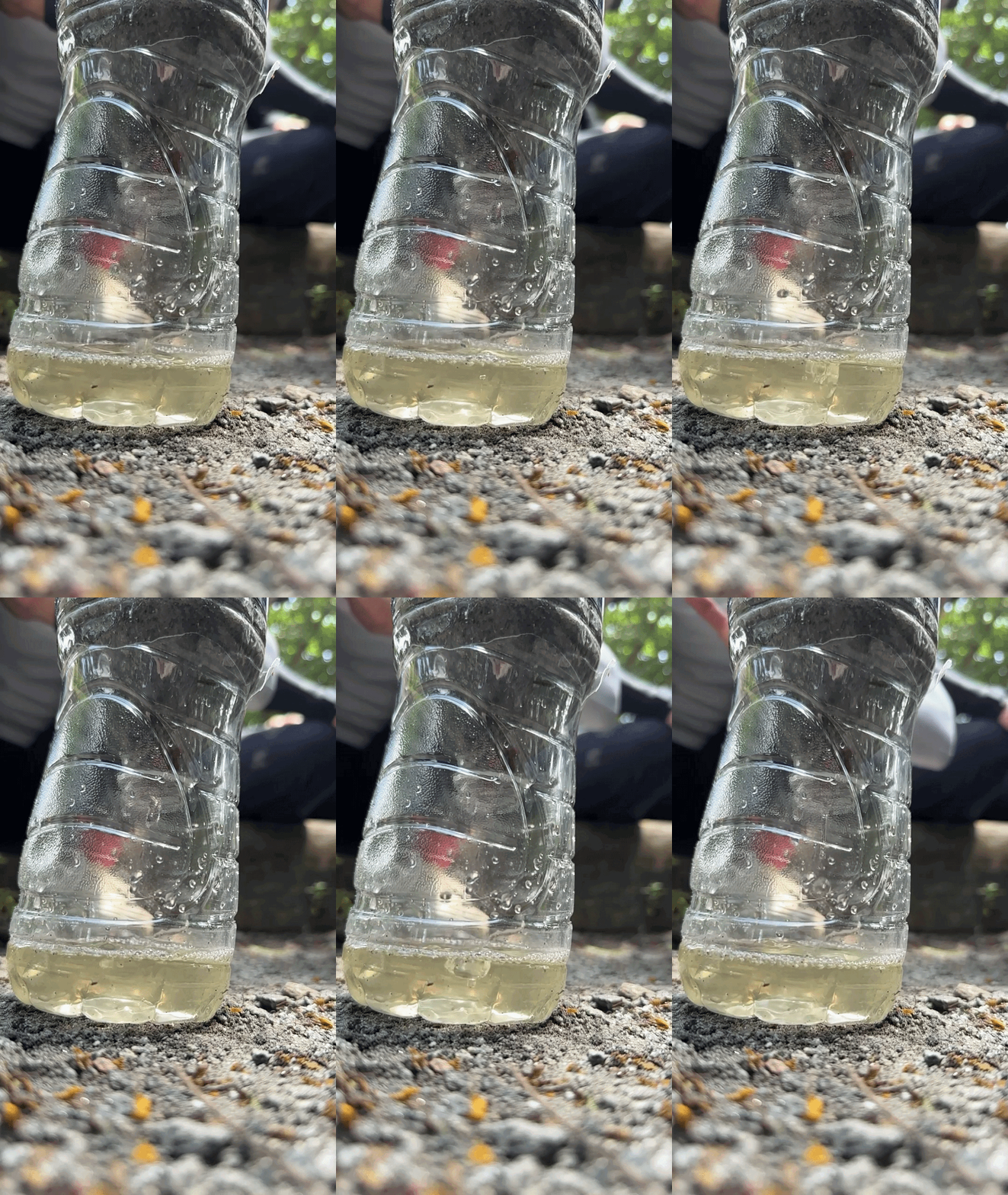
Murky going in, oddly clear coming out. That landed better than any explanation could have.
THE SHELTER TEST
Shelter-building is where a family stops being a group of individuals doing tasks and becomes, briefly, a crew.
They gathered material. They argued about the ridge pole. Somebody had a theory. Somebody had a better theory and less authority. Dad held things steady while being given instructions by people a third his height. A structure emerged that was, by any objective measure, a bit lopsided.
The shelter passed its first test: everybody fit. Nobody had to sleep outside.
They sat inside it together, filthy, sweating, pleased with themselves, in a structure they had made out of a forest floor. No screens had been confiscated. Nobody had needed to negotiate about screens at all, because there had been nothing to compete with for about six hours.
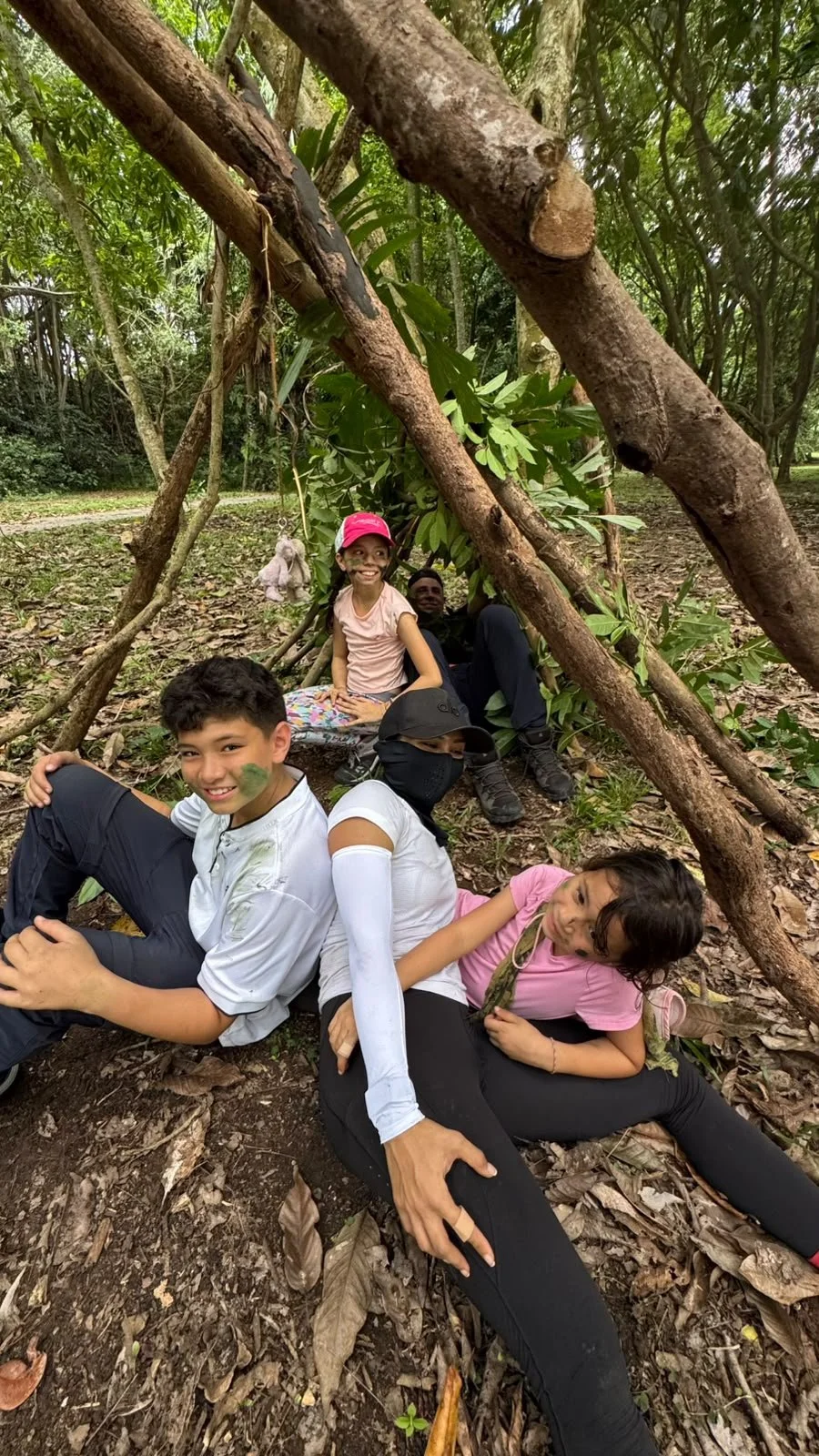
Ridge pole settled, debate closed, and the best seat of the day turned out to be right underneath it.
WHAT THE PARENTS WERE ACTUALLY WATCHING
Parents do not book a day like this for the ferro rod.
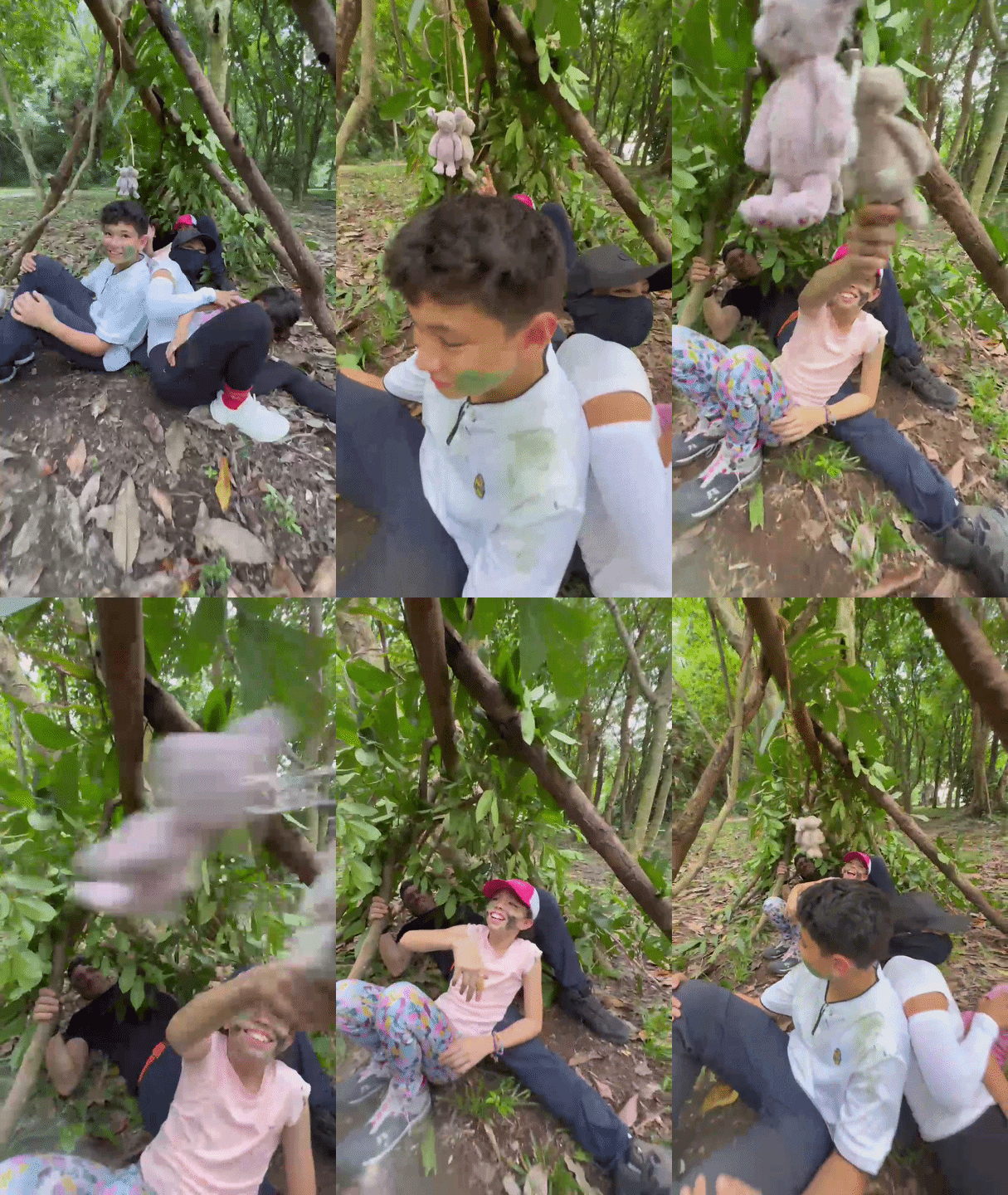
Built it, then immediately lay down in it. Entirely fair.
Prefer to ask a question first? Tell us about your kids and we will tell you honestly whether this is a fit.
FREQUENTLY ASKED QUESTIONS: FAMILY SURVIVAL EXPERIENCES IN SINGAPORE
-
Yes. Family sessions are built around what children can actually do and enjoy, with the difficulty of each skill adjusted per child. Fire and tools are always used under the direct supervision of our trainers, and because the session is private, the pace is set by your family rather than by a class timetable.
-
We have run family sessions across a wide age range, including mixed-age sibling groups spanning younger children through to pre-teens. Because the day is private and built around your family, the right starting point depends more on the individual child than on a number, so tell us their ages and what they are like and we will give you an honest answer.
-
This is one of the main reasons families book a private session. Rather than splitting children into age groups, we run the same skills at different depths so each child gets a version that suits them, in the same place at the same time.
-
Parents take part. It is not a drop-off camp. Most of the value parents describe comes from doing the skills alongside their children rather than watching from the side.
-
Commonly: fire-lighting with a ferro rod, preparing tinder and natural materials, building and maintaining a small fire, supervised use of outdoor tools including sawing, gathering natural resources, improvised water filtration, shelter building, and survival problem-solving such as what to do if you get separated from the group.
-
On Pulau Ubin, at Jelutong Campsite, reached by bumboat from Changi Point Ferry Terminal. We can also look at other locations on request.
-
Usually yes, and it is one of the clearest fits we see. Real tools, real fire and real problems cannot be watered down, so older children get genuine responsibility rather than a simplified version of an activity.
-
No. Most families arrive with none.
-
Old clothes and closed-toe shoes that nobody minds ruining, a full change of clothes, a hat, sun protection, insect repellent and plenty of water. We confirm the kit list with you when we plan the session, including what we bring, so nobody turns up carrying things they do not need.
-
A bit of rain is part of being outdoors in Singapore and it rarely spoils anything. Damp hands make fire-lighting more interesting rather than impossible, and most children enjoy it more. If the weather on the day looks genuinely unsafe, we talk it through with you and agree a sensible plan rather than push on regardless.
-
Private family sessions are built to fit, so both the length of the day and the cost depend on how long you want to be out, how many of you are taking part, and which skills you want included. Tell us the ages of your children and the kind of day you have in mind and we will come back with timings and a quote.
-
Yes, private family sessions are booked for your family alone.
-
Yes. Families visiting Singapore can book a private session, and Pulau Ubin works well as a half-day or full-day contrast to the city. Send us your dates as early as you can and we will tell you what is possible.
-
Yes, and it is designed to be. We shape the skills, pace and intensity around your children’s ages, confidence and interests before the day.
READY TO BUILD YOUR FAMILY’S ADVENTURE?
Tell us a little about your family and the kind of day you have in mind. We will come back with ideas built around your children, their ages, what they are actually into, and how adventurous you want the whole thing to be.
There is no standard package to pick from. The day is private to your family, so the planning starts with them.
WHERE FAMILIES GO NEXT
Pulau Ubin is where a lot of families start. It is not where they all stop.
Parents bring their seven-year-old daughter to the heart of Mongolia. Open steppe, a nomadic host family, and a friendship with a goat that outlasted the trip.
For this family, Mongolia was not just about reindeer. A ten-year-old, a herding community in the far north, and a trip that turned out to be about the people more than the animals.
The Singapore mother who makes all of this look easy. Ultramarathons, mountains and abseiled waterfalls, usually with two primary-school boys somewhere close behind.