Your Team Isn’t Outdoorsy? Good. That’s Where the Team Building Starts.
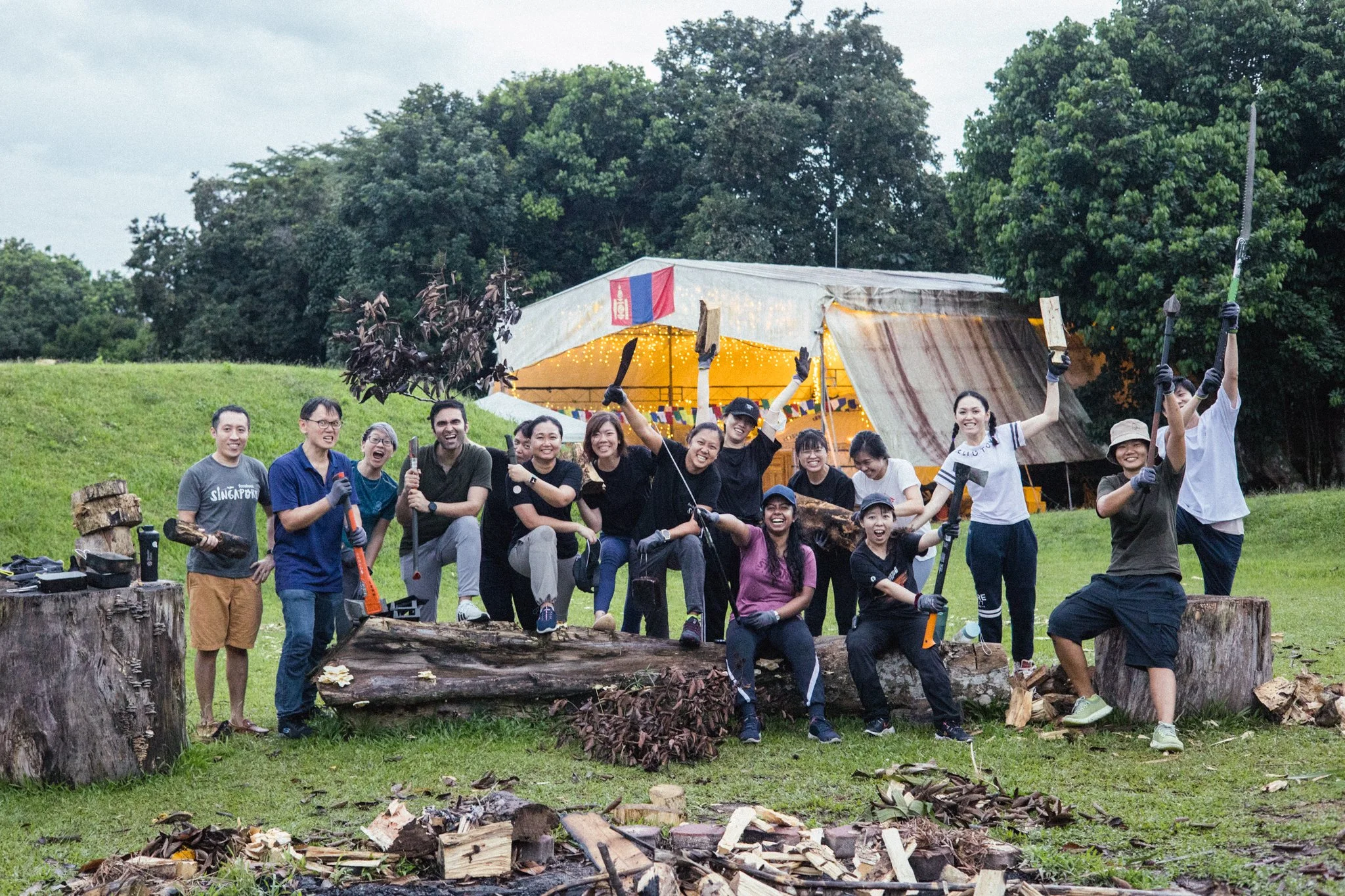
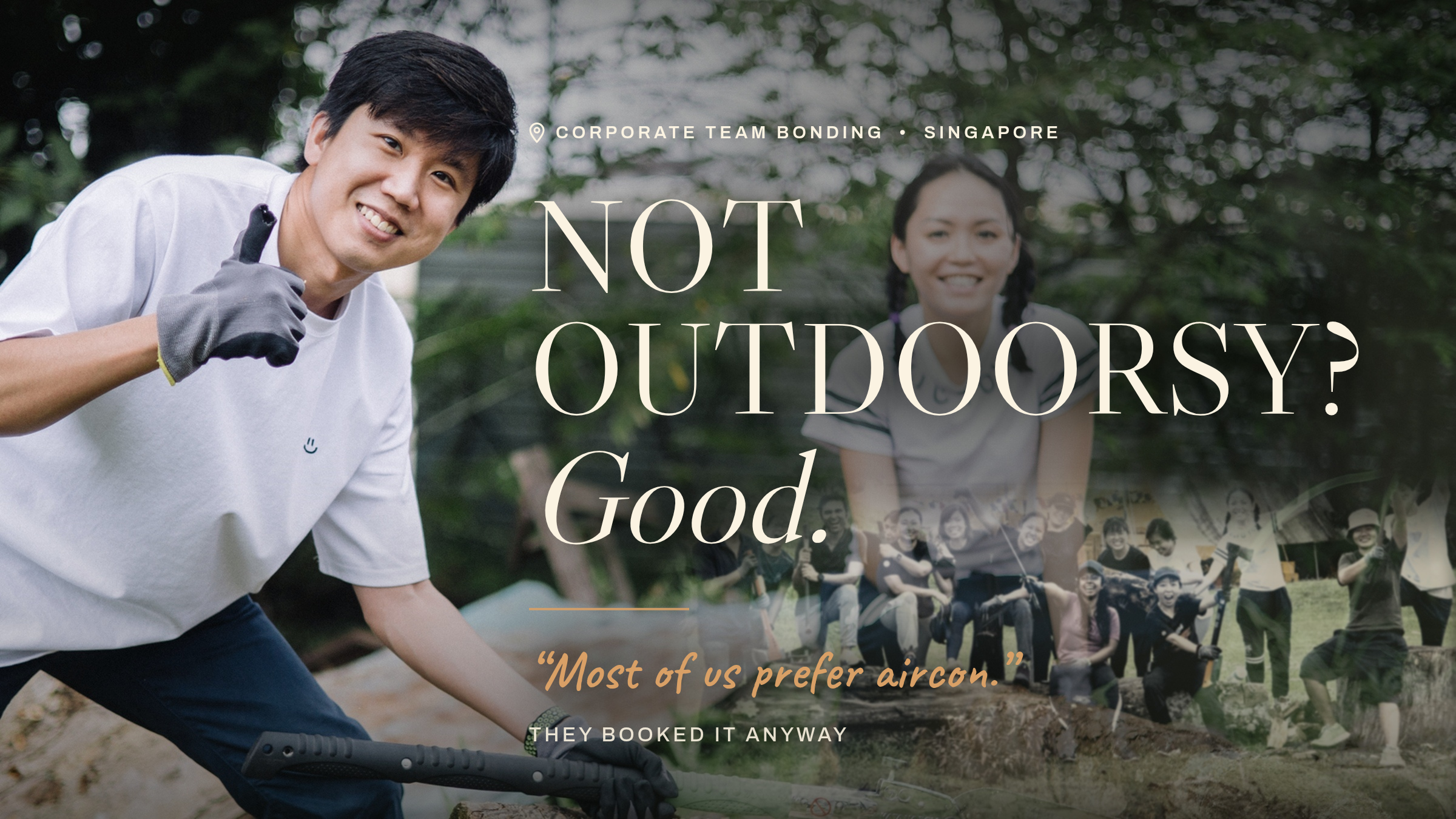
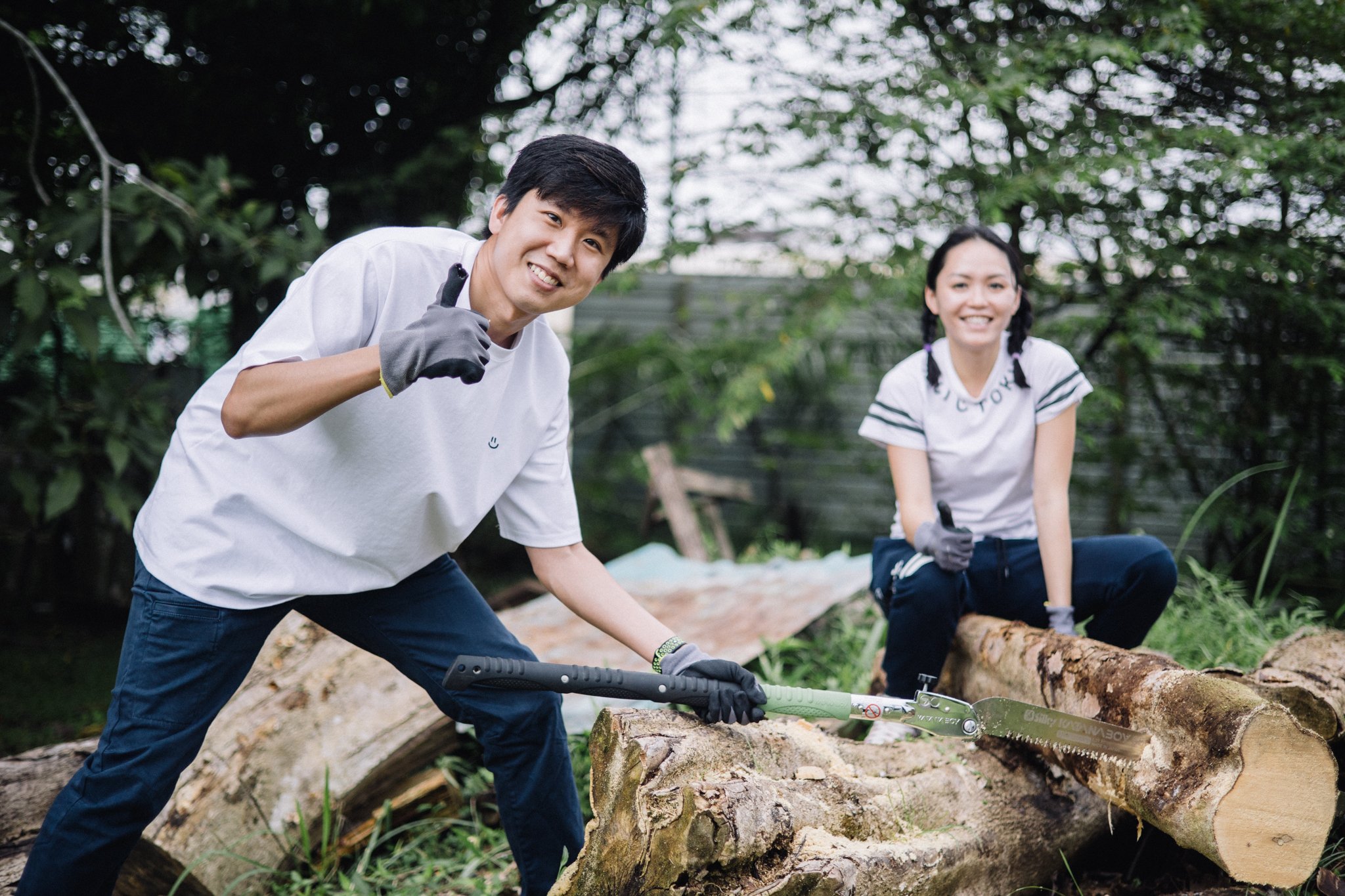
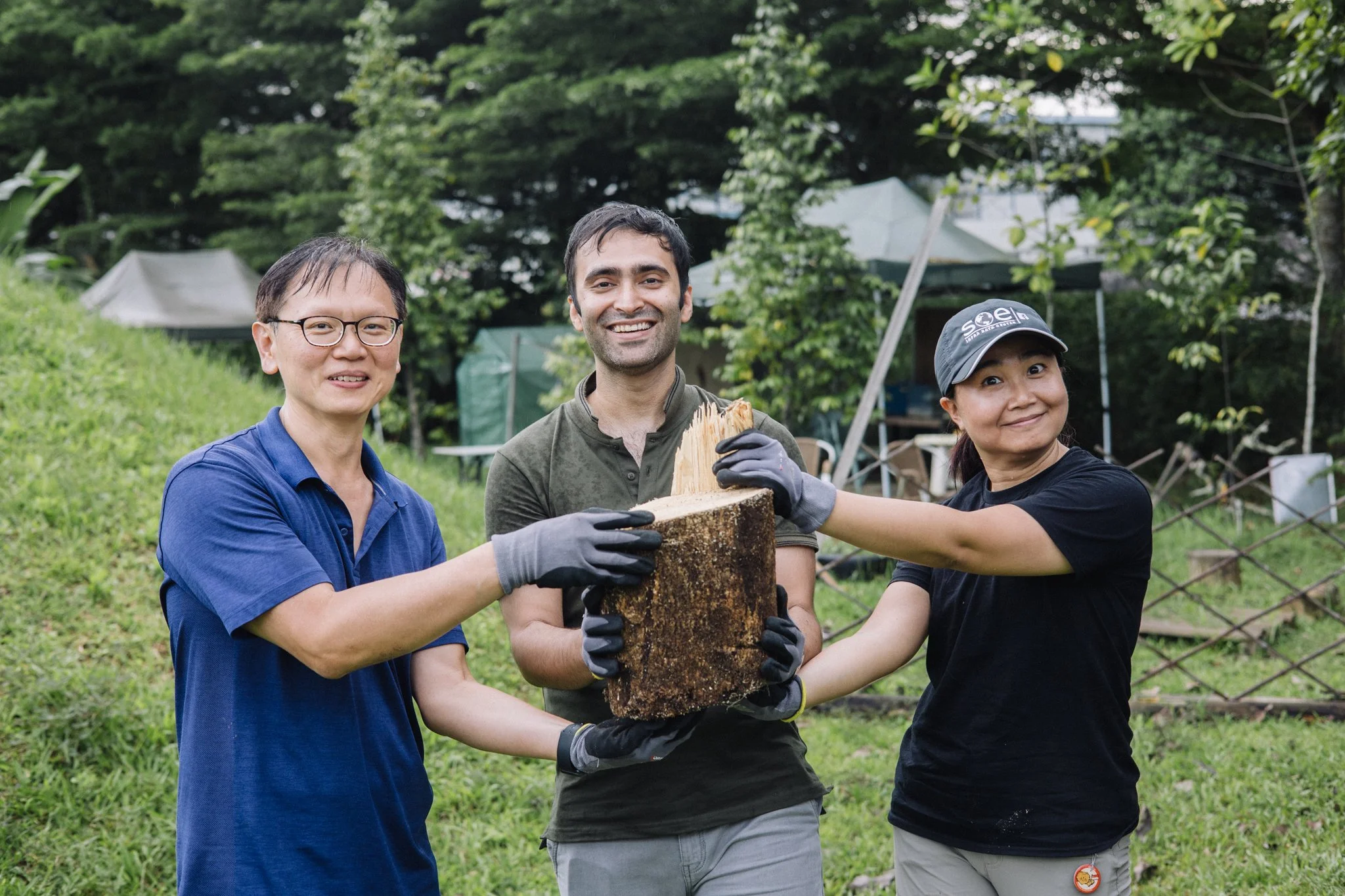
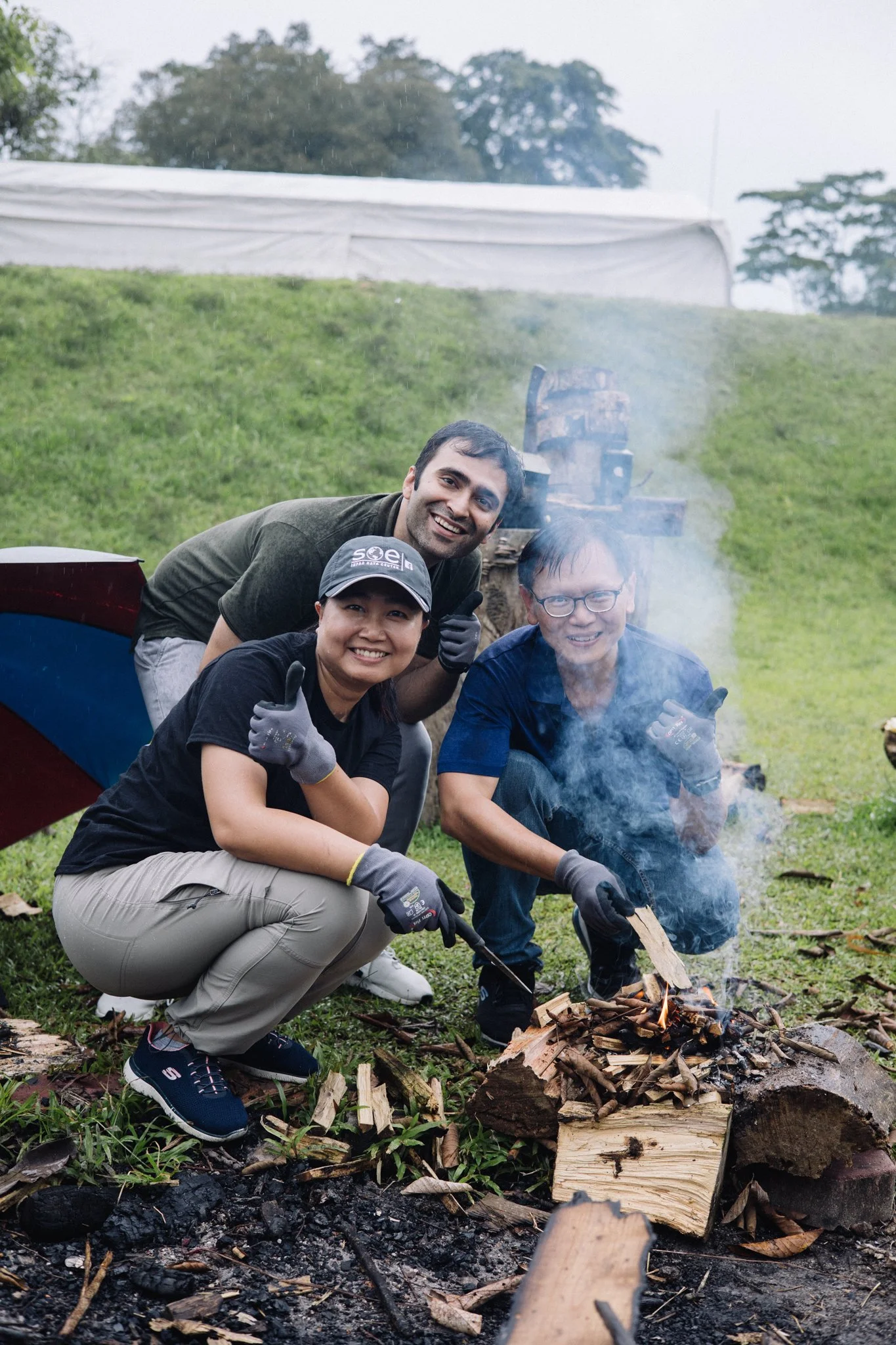
Fourteen people, fourteen very different opinions about saws. One team by the time we lined up for this photo.
"Most of my team would rather be in air-conditioning."
That was one of the first things we heard while planning an outdoor team bonding day for a corporate team in Singapore. It was not said as an apology. It was said as a warning.
Some people in the group trained regularly. Others had not spent a full day outdoors in years. A few were quietly worried about the heat, the insects, and the possibility of looking incapable in front of colleagues they usually only meet in meeting rooms.
So the real brief was never "give us activities". It was a more nervous question than that: will this work for everyone, or will half the group spend the day waiting for it to finish?
That question comes up in almost every corporate enquiry we receive. Our answer tends to surprise people. It is also the brief that shapes the way we build corporate team bonding in Singapore.
Your team does not need to be outdoorsy. The programme needs to be designed properly.
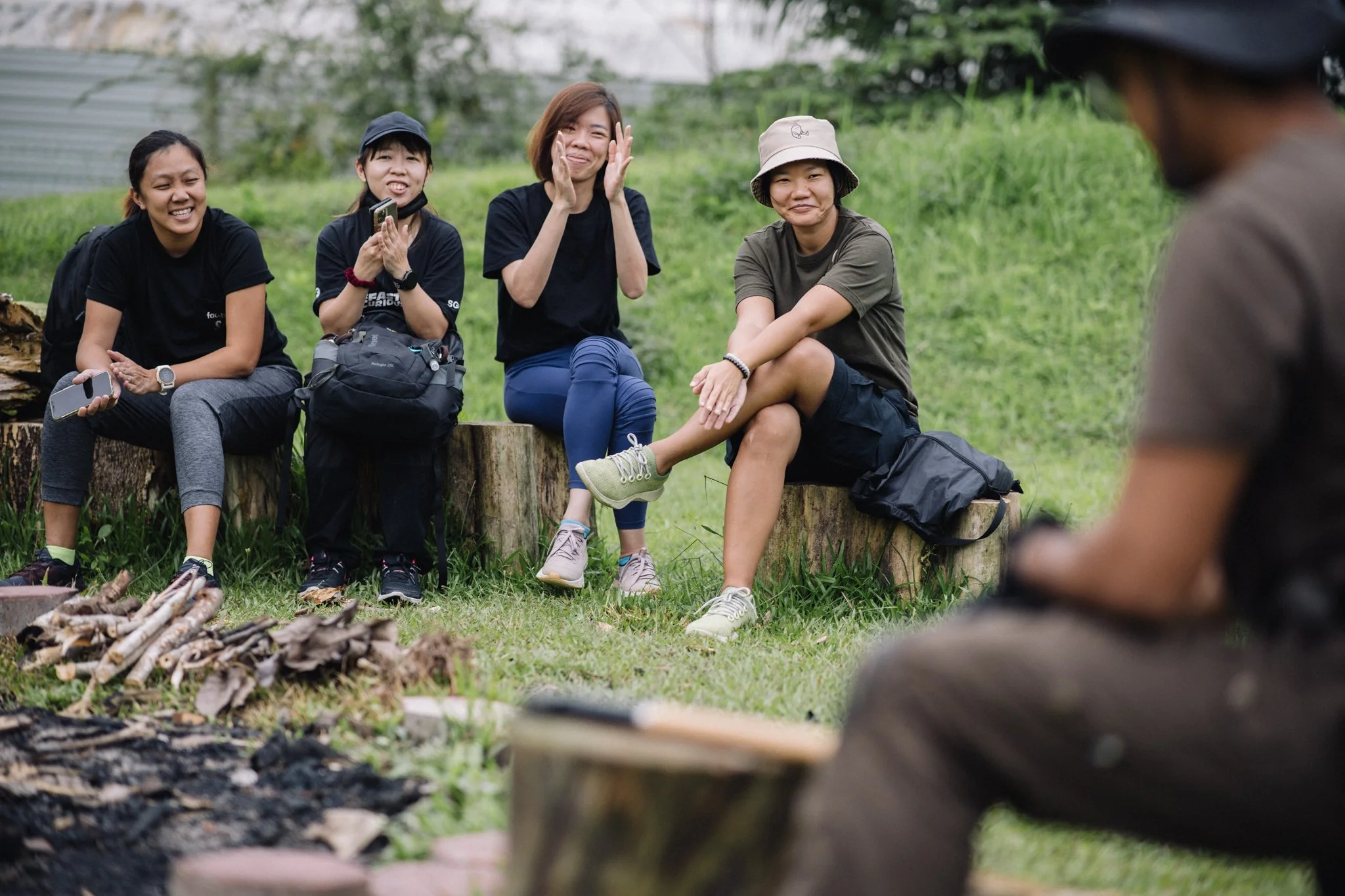
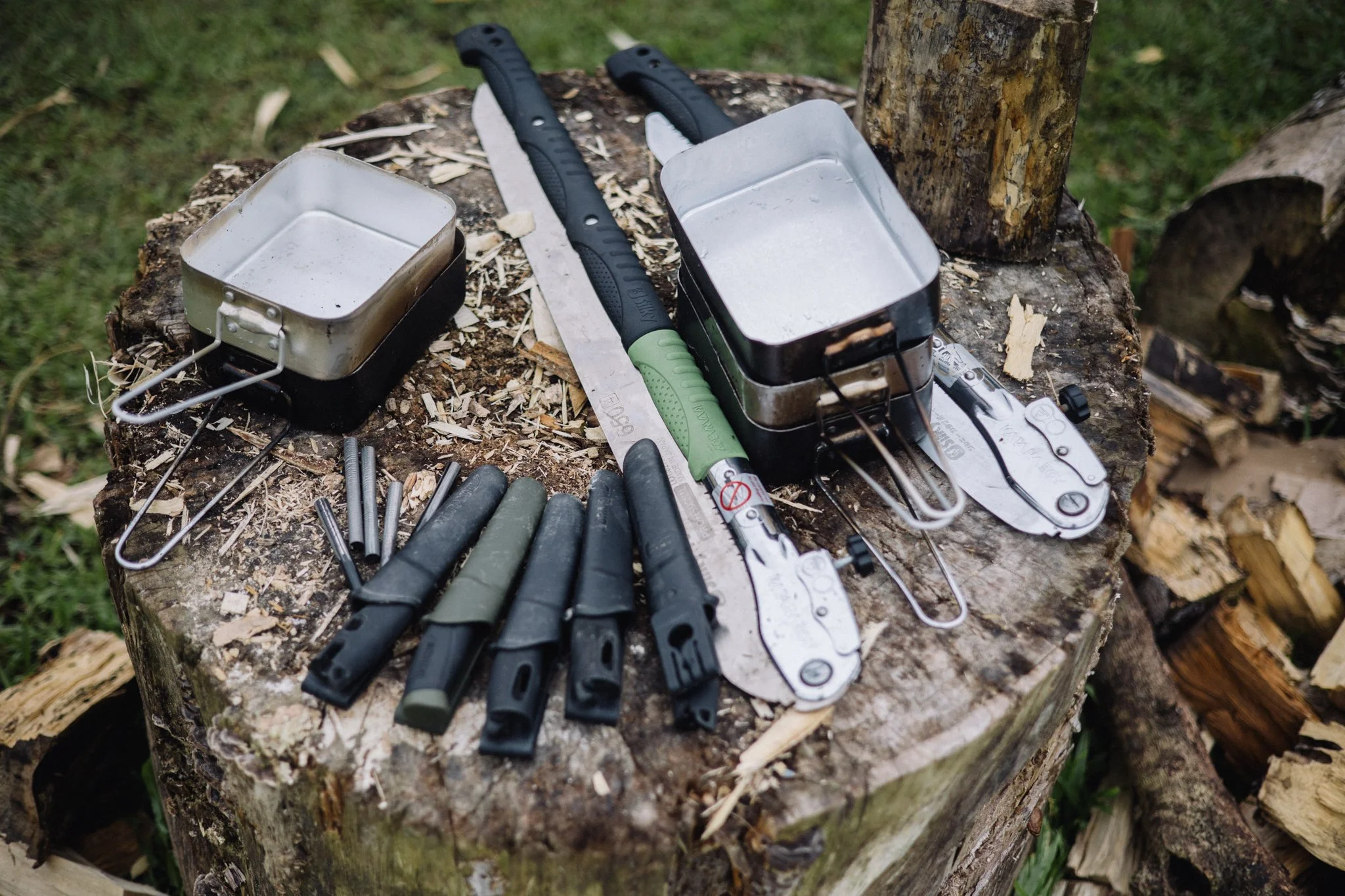
Two photos, one story. A team who swore they were not outdoorsy, and a pile of kit not one of them had touched before today.
The Setup
The team: A Singapore corporate crew with more air-con mileage than outdoor mileage.
The brief: Keep the physical intensity moderate. Make sure different fitness levels and experience levels can contribute.
The starting point: Mixed fitness, mixed outdoor experience, plenty of first-timers.
The format: Hands-on outdoor challenges designed around small teams and changing roles.
What went down: Firecraft, Silky folding saw work, axe and wood processing, outdoor cooking and practical problem-solving.
The design rule: Strength shouldn’t be the only way to be useful.
Where this experience lives today: Pulau Ubin, Singapore.
Facilitated by: Beyond Expeditions.
The Brief: A Team That Did Not See Itself As An Outdoor Team
On paper the request looked straightforward: a day out of the office, something active, something memorable. In practice, the organiser was managing three different anxieties at once.
Fitness. The gap between the most active and least active participants was wide, and nobody wanted a day that quietly rewarded only the athletic.
Experience. Most of the group had never started a fire, handled a saw, or cooked anything outdoors. A programme built on assumed competence would have left a lot of people standing around watching.
Hierarchy. Teams carry their dynamics with them. The senior person is still the senior person in a field. If a programme is not designed carefully, the office pattern simply gets re-staged outdoors: confident people lead, quieter people watch.
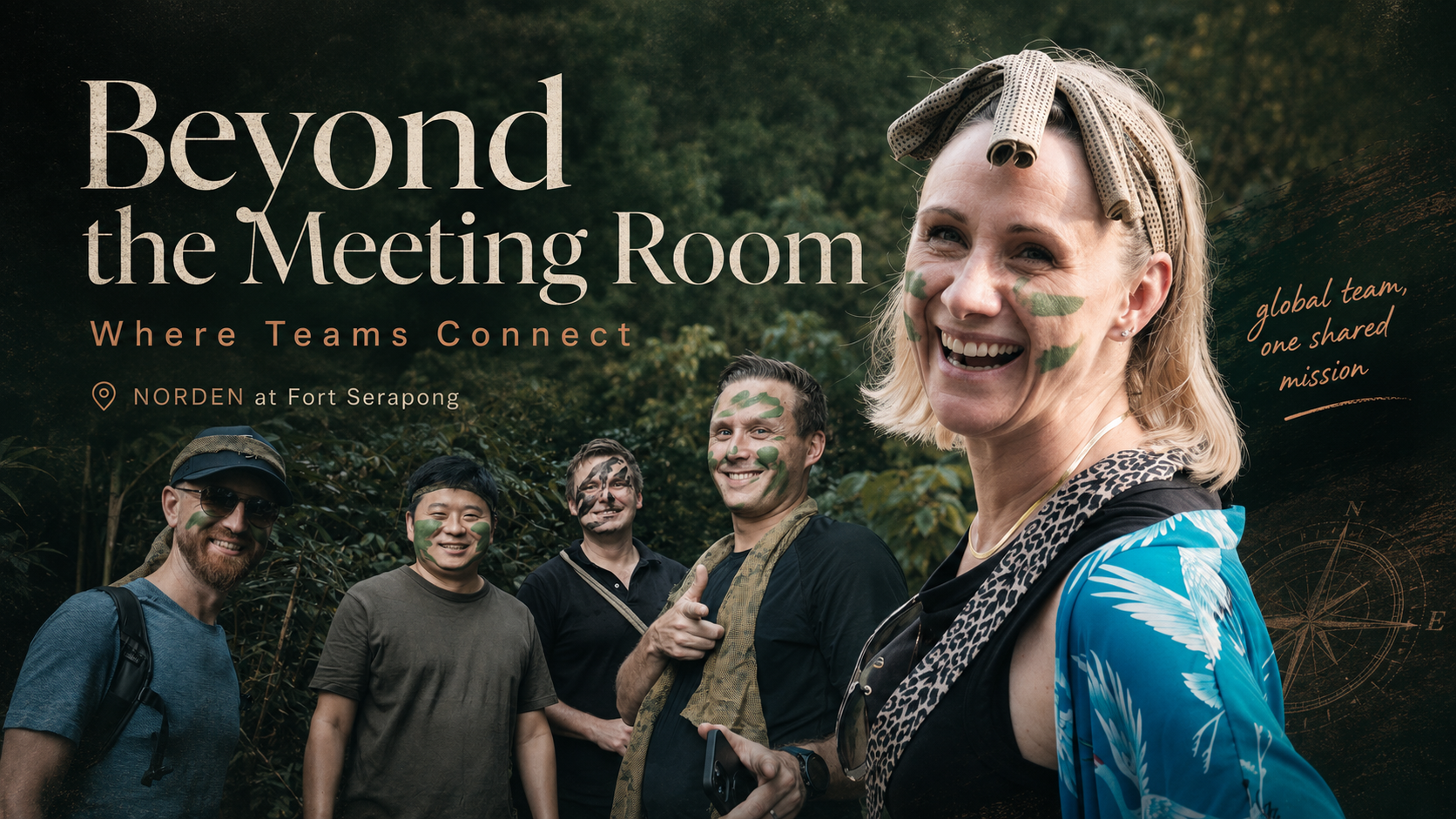
Fitness, experience and hierarchy are exactly the three things a well-designed outdoor programme can loosen. But only if the challenges are built for it. Those same three things show up in other shapes too. Another of our programmes puts a global team in the field where nobody shares a first language, and communication has to do the work that fitness cannot: see how NORDEN’s international team pulled it off at Fort Serapong.
What Happened In The Field
The saw doesn’t need two people. The job does.
The first real shift happened over a log.
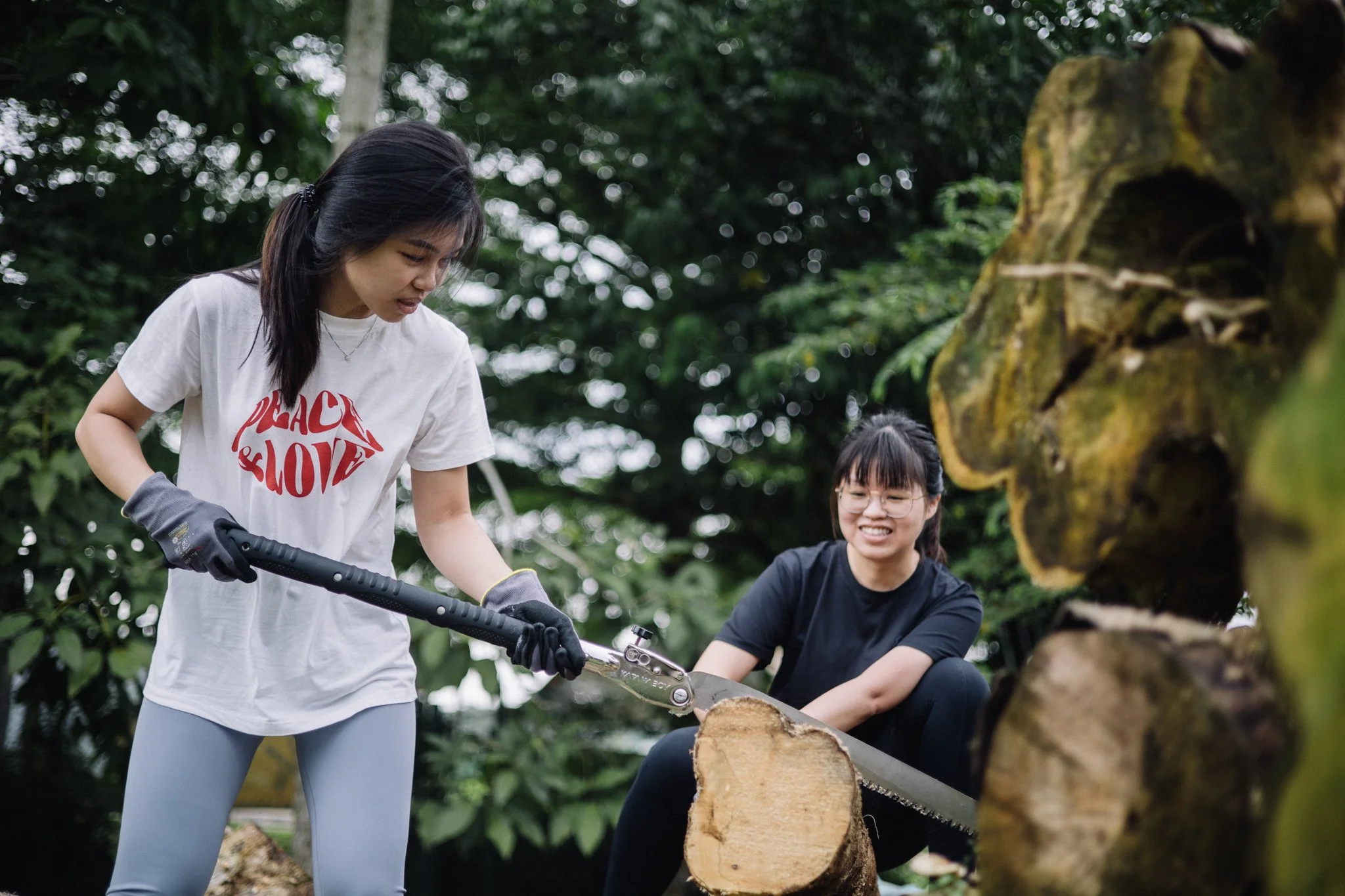
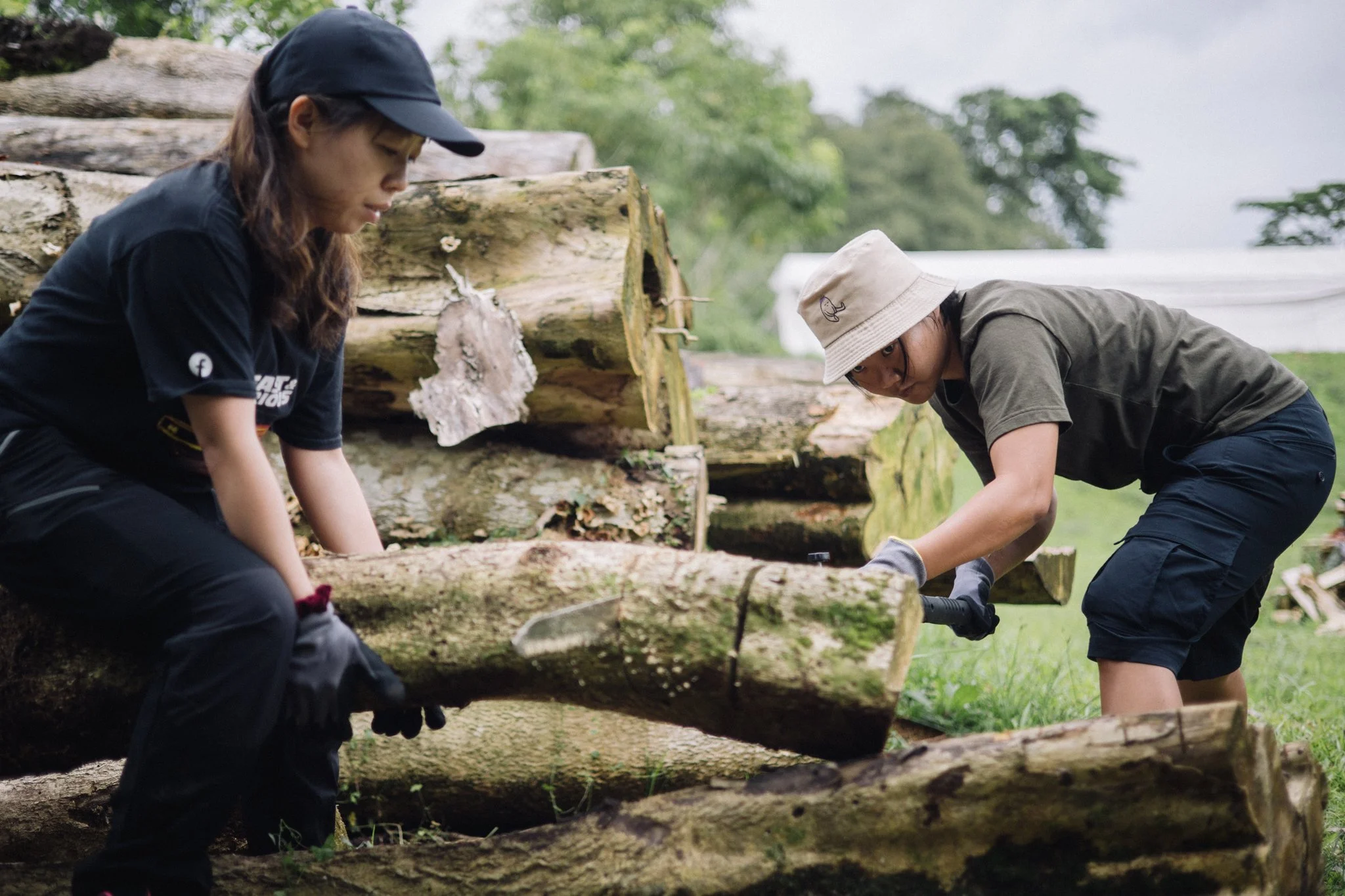
We introduced a simple task using a Silky folding saw. One person could operate the saw perfectly well on their own. But cutting through a heavy section of wood safely and efficiently was rarely a one-person job.
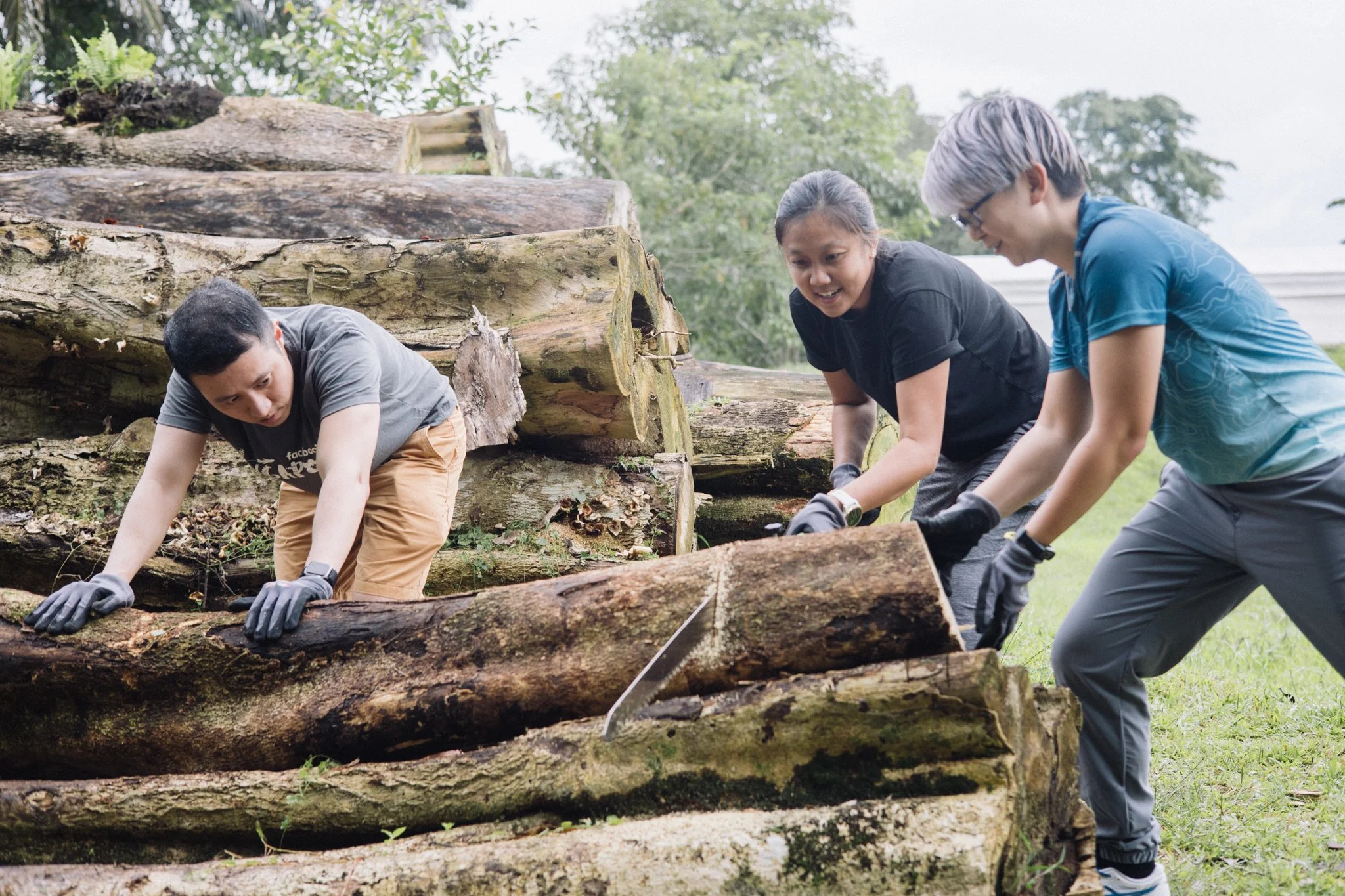
Someone had to saw. Someone else had to steady the log. Others naturally found where to hold, when to reposition it, and when to give the person cutting enough space to work.
That was where the interesting part started.
The strongest person wasn’t automatically the most useful. What mattered was whether the team could organise themselves around the task. One person focused on the cut. Another kept the log stable. Someone else noticed when the angle needed changing or when the team needed to reset.
Nobody needed to do everything.
They just needed to understand what the job needed from them at that moment.
And that is a much better reflection of how good teams actually work.
The fire
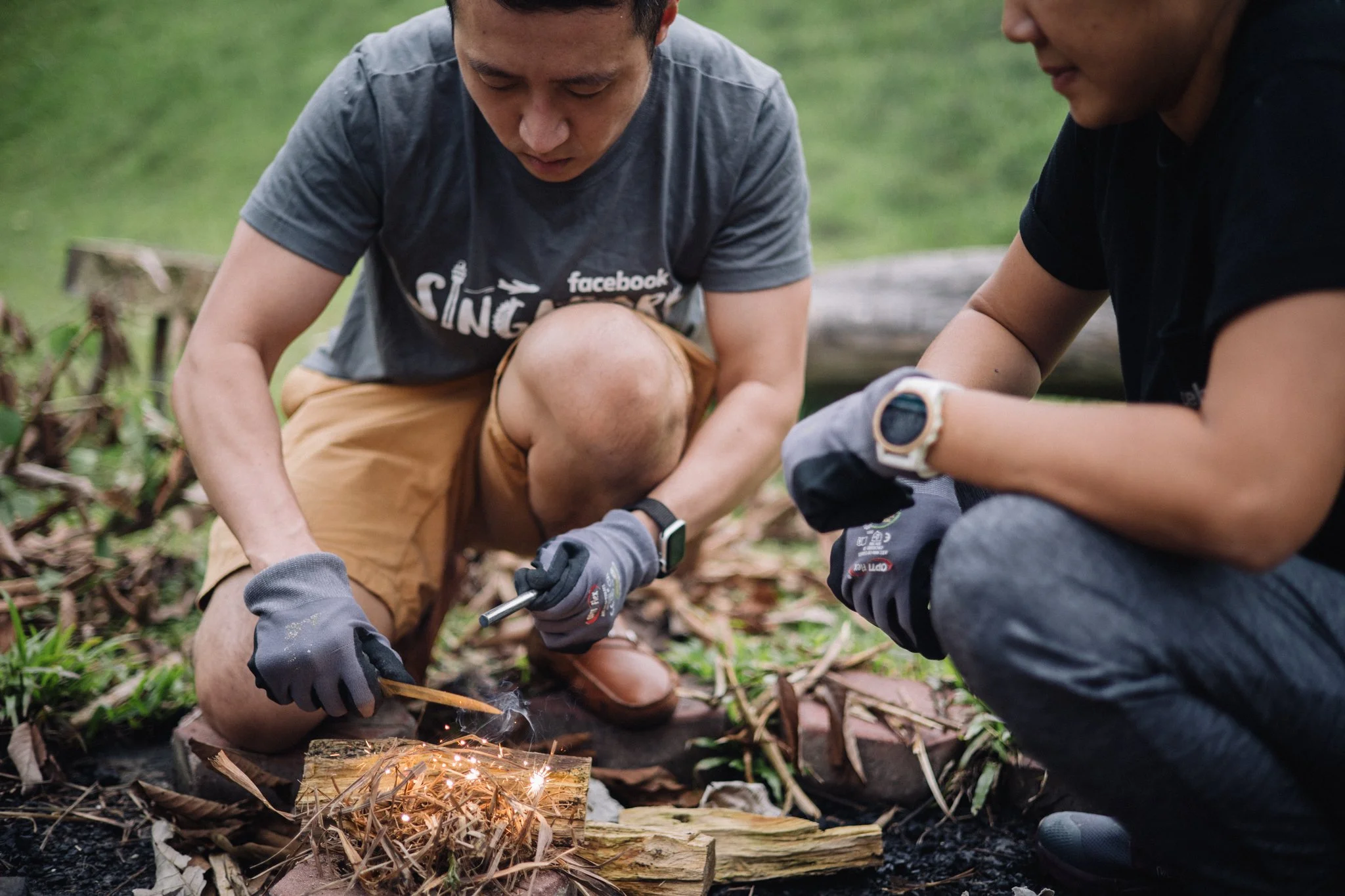
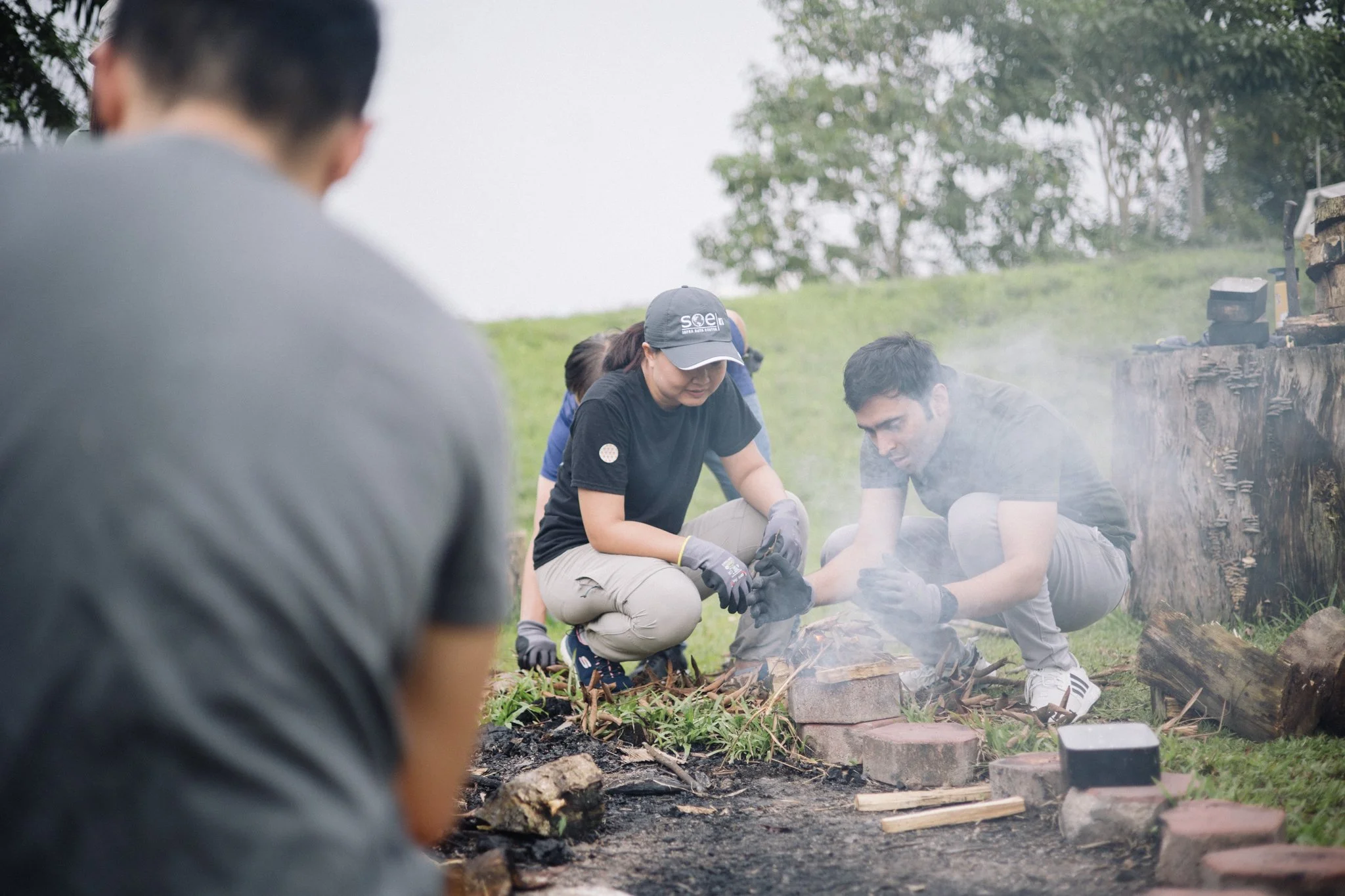
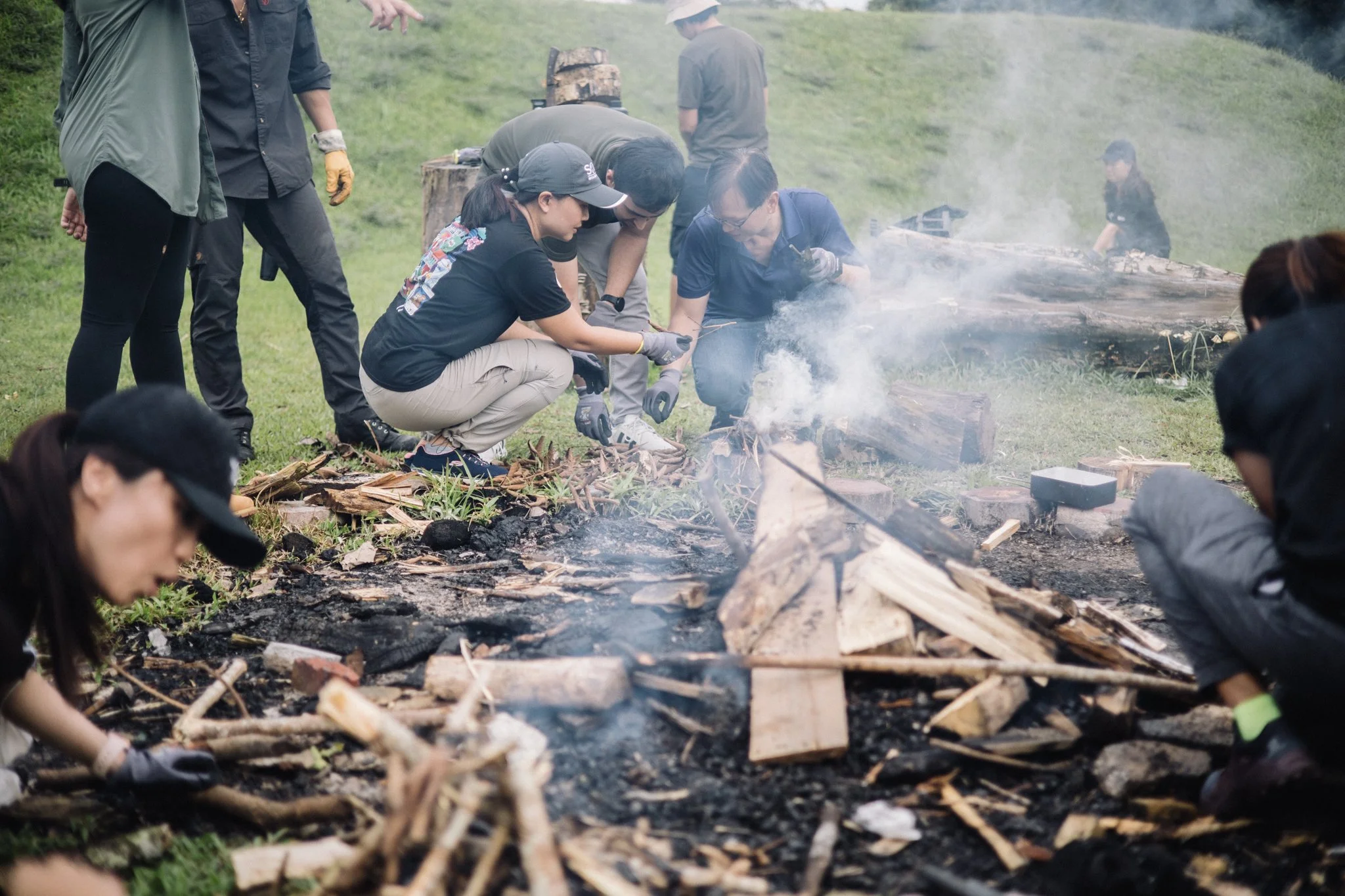
Fire-craft is the most honest task we run.
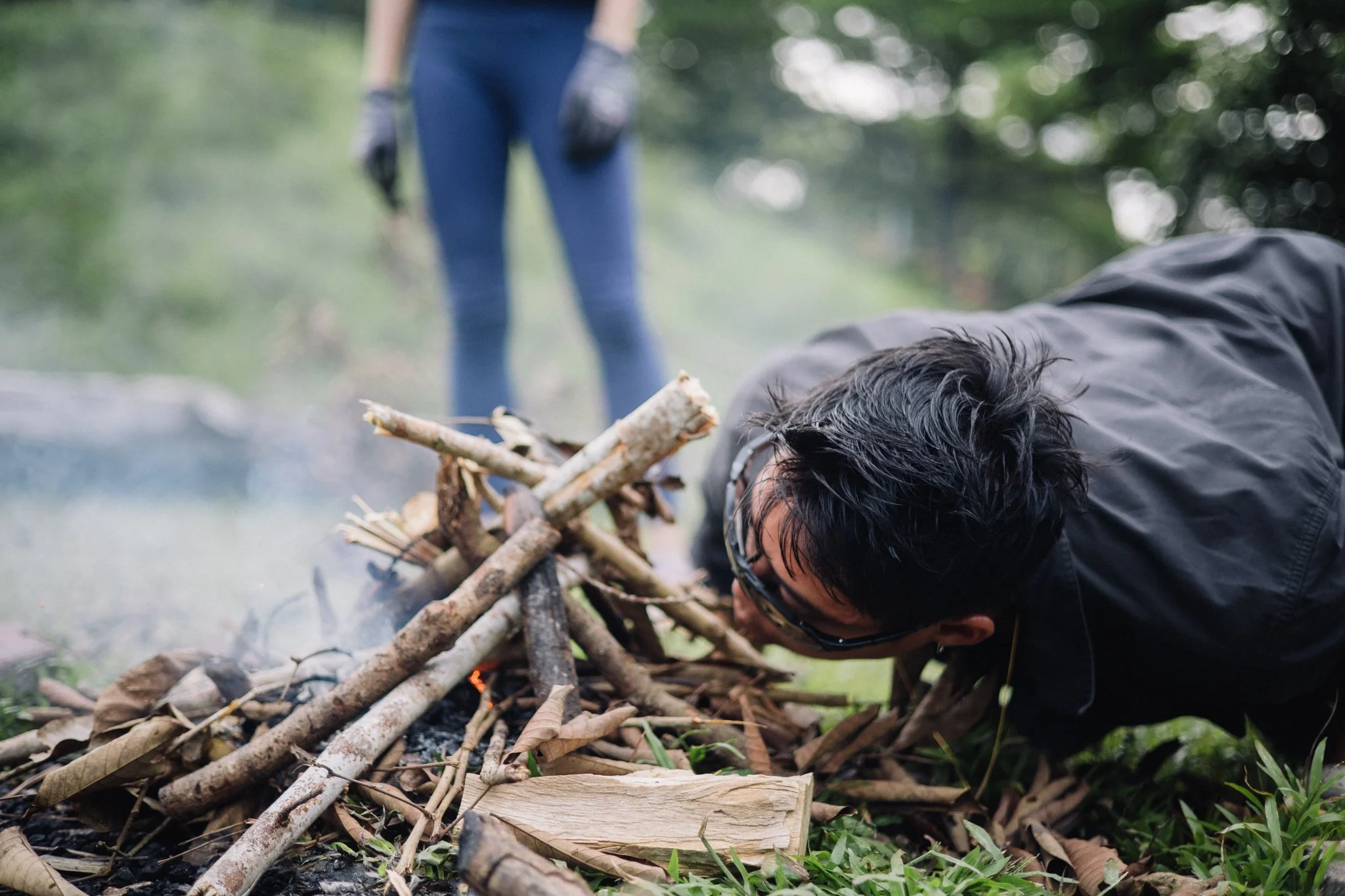
You cannot rush it, you cannot fake it, and you cannot delegate it to the most confident voice in the group. It rewards preparation, patience and attention to small details: the size of the tinder, the direction of the wind, the discipline of not adding a big piece of wood too early.
Several of the least outdoorsy participants turned out to be very good at this. People who had been hesitant during the more physical stations became completely absorbed. One participant spent close to twenty minutes on a single ember, shielding it with cupped hands while colleagues fed in dry grass around her.
When it finally caught, the reaction was louder than anything else that afternoon.
The axe
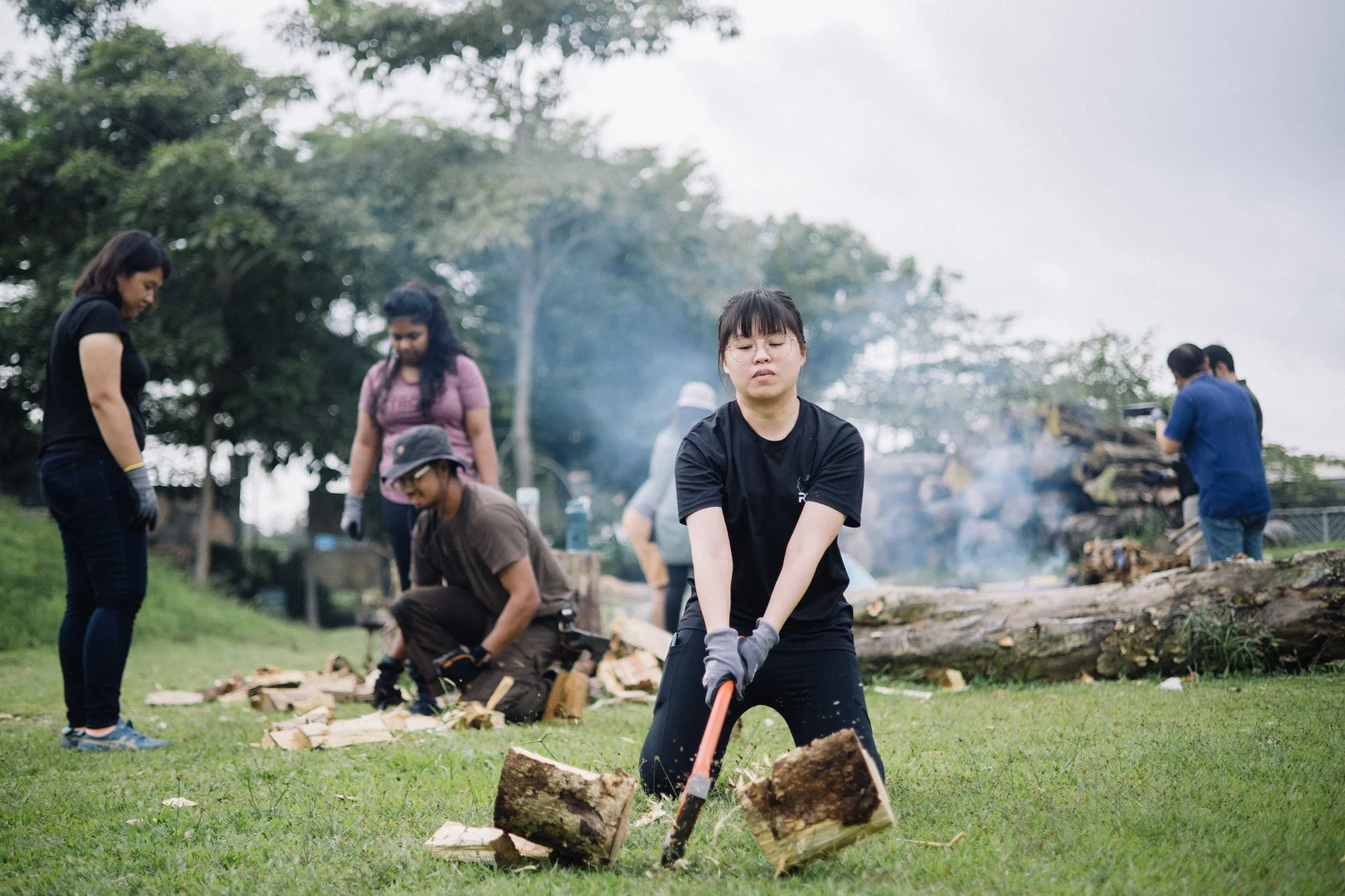
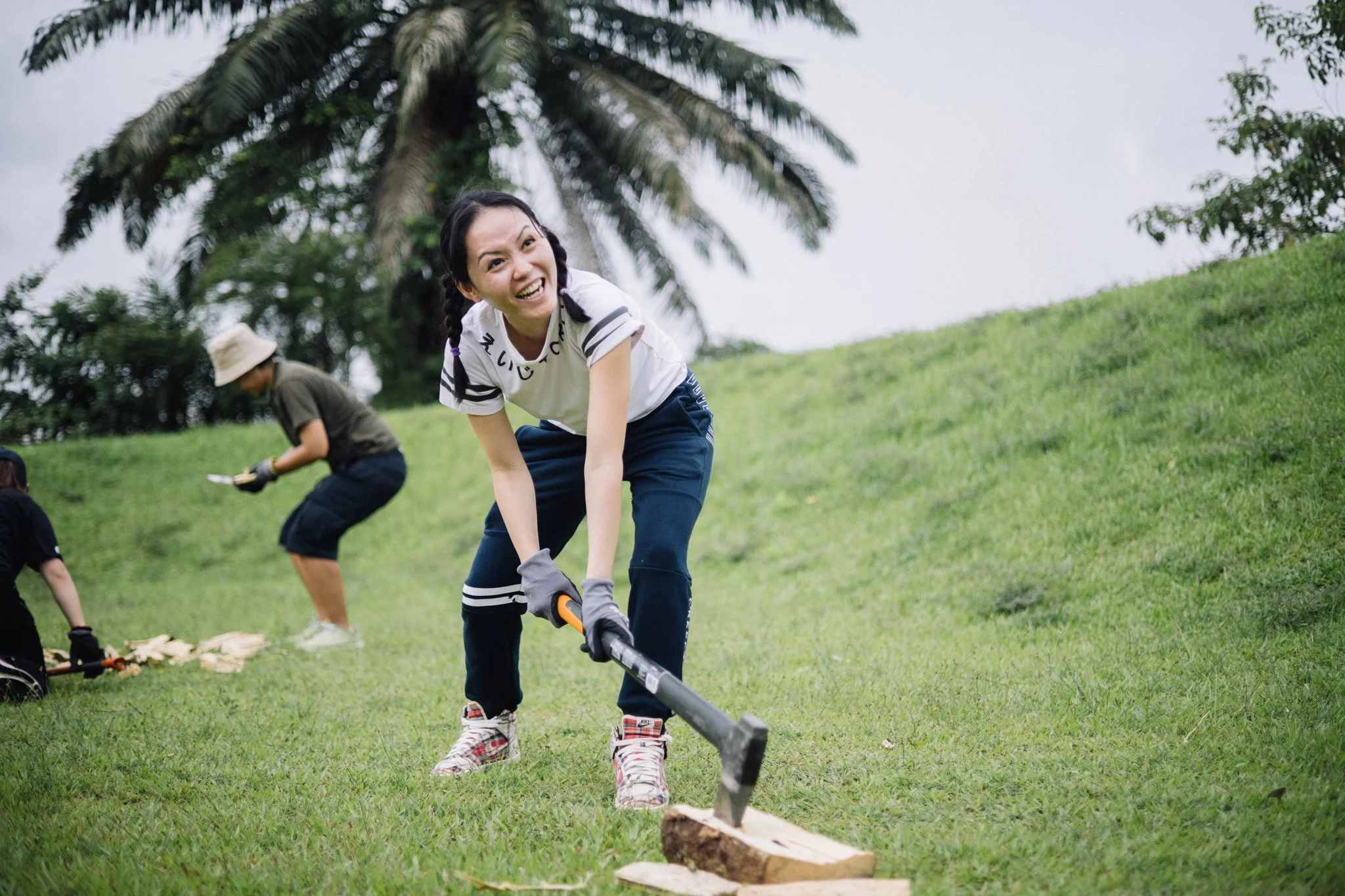
Axe work was the station most people assumed they would be excluded from.
It is the most visibly physical task of the day, and it is where the fitness gap should have shown most clearly. It did not, because we did not run it as a race.
Splitting wood safely is mostly technique: stance, grip, a controlled drop rather than a violent swing, and knowing when to stop and hand over. Participants who had described themselves as not sporty were making clean splits once they stopped trying to hit hard.
There was also a quieter kind of contribution around that station. People who kept the wood sorted, cleared the ground, held the count, watched the safety line. Nobody assigned those jobs. They just got done. Those unassigned jobs matter even more at scale. On a 72-person Fort Serapong mission, keeping a large group moving as one came down almost entirely to them.
The Design Principle: Stop Making Effort The Only Currency
Most corporate team building quietly runs on a single currency: effort. Move faster, push harder, shout louder, win.
The problem becomes obvious once you say it out loud. If effort is the only thing that counts, the most physically capable people become the most valuable people, and everyone else becomes support staff for the day. That is not bonding. That is a ranking exercise with better scenery.
So we design challenges with several different ways to be useful. In practice, every station has to reward at least three of the following: patience, sequence, technique, observation, communication, and physical input. Physical input is never allowed to be the deciding factor on its own.
When a task genuinely requires timing, accuracy or patience, a fit participant who rushes will lose to a careful participant who does not. That is not a handicap system. It is simply a more accurate model of how work actually gets done.
This is the core of how we build corporate team bonding in Singapore for mixed groups. The challenge stays real and the difficulty stays real, but the route to contributing is deliberately wide.
The Roles Nobody Was Assigned
By the middle of the afternoon, roles had appeared on their own.
The pacer. The person who kept the group timing honest and stopped the rushing.
The technician. The one who worked out the method, then taught it three times over.
The quiet finisher. Rarely the loudest voice, but the one who noticed a task was nearly done and closed it out.
The safety eye. The participant who instinctively watched hands, feet and swing arcs.
The morale lead. The person whose running commentary kept a frustrating task from turning tense.
None of these were briefed. They emerged because the tasks left room for them. And several were filled by people their own colleagues said they would not have predicted.
Why This Mirrors The Way Real Teams Work
The reason this format works for corporate groups is not that it builds outdoor skills. Almost nobody needs to start a fire at work.
It works because a field compresses a workplace pattern into a single afternoon.
In a normal week you rarely get to see who carries a project through the boring middle section, who spots a risk before it becomes a problem, who can explain something clearly under pressure, or who quietly keeps a frustrated colleague going. Those contributions are real, and they are also close to invisible in a meeting room.
Put the same team around a log, a fire and a limited amount of daylight, and all of it becomes visible in a few hours. People start to see each other differently. More importantly, some of them start to see themselves differently. The participant who was dreading the day and then built the fire that cooked the group lunch does not walk back into the office with quite the same sense of her own usefulness.
That shift is the actual return on a bonding day. Not the photos, and not the group T-shirts. We did keep a few of the photos, though. The short version of this day went out as a field carousel on Instagram well before it earned a full write-up.
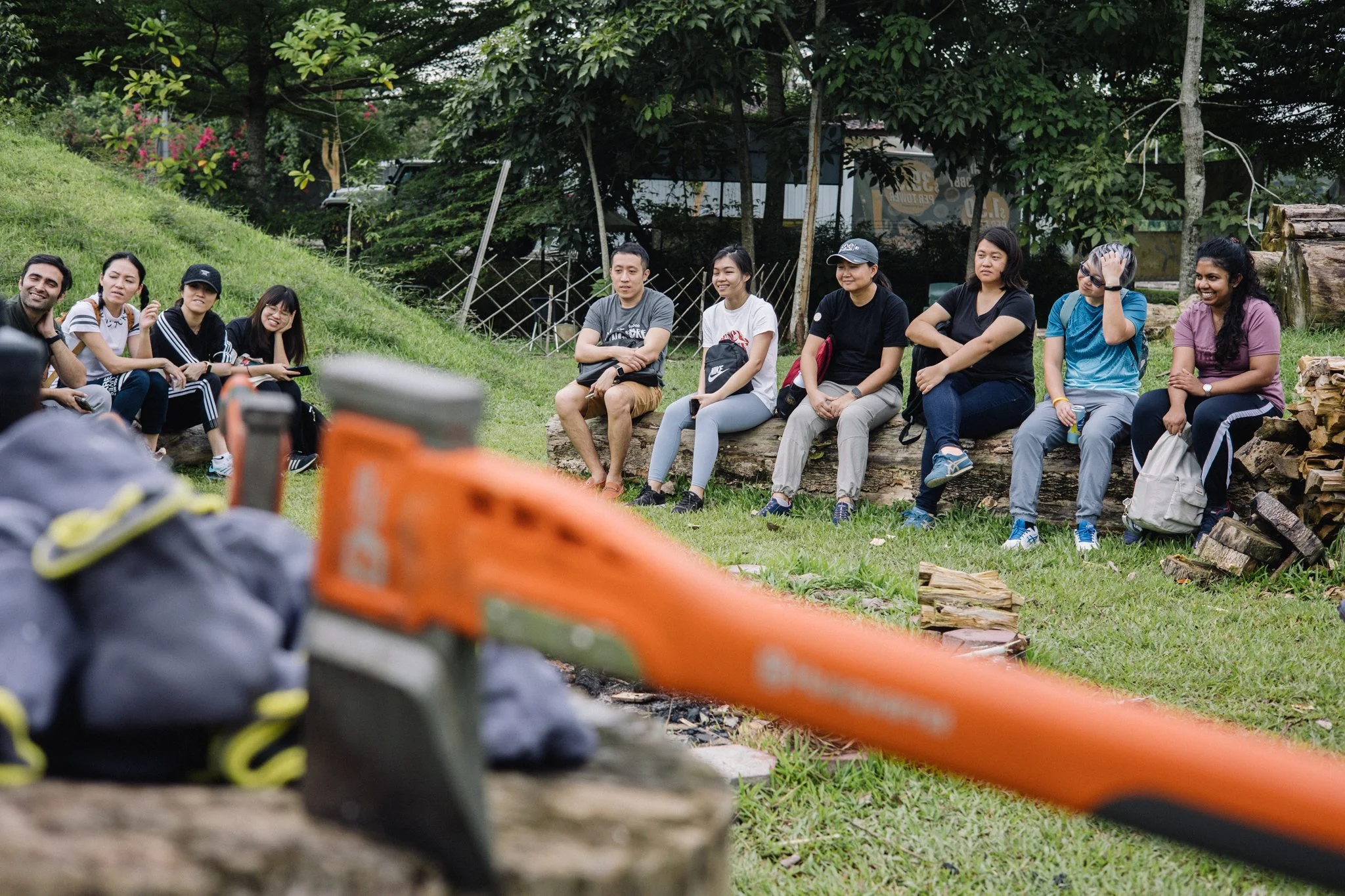
Five minutes ago, air-con was winning the vote. Now they’re on a log, fully invested in the firewood debate.
Planning Notes For HR And L&D Teams
Planning an outdoor programme for a team with mixed fitness and little outdoor experience? These are the things worth getting right before the date is confirmed.
-
“Generally quite active” does not tell us very much. What really helps is the honest spread: who is nursing a knee or a back, who is pregnant, who is easing back in after an injury, who has genuinely never spent a whole day outside. Give us that picture and we can build a day that works from the edges in, rather than one that only ever suits the middle.
-
This is the most useful question you can put to any provider, and the answer tells you a great deal. If it is vague, or if it comes down to “there is an easier version for them”, then effort is still the only thing being rewarded. A good answer is specific: here is the job, here is why it matters, and here is the sort of person who quietly turns out to be brilliant at it.
-
A little competition is good fun. Make it the whole structure, though, and teams quietly start benching their slower people to protect the score, which is the opposite of the day you were hoping for. Keep the scoreboard light and let the task do the work. The best moments tend to arrive when nobody is counting.
-
In Singapore, shade, water, somewhere to sit and sensible session lengths will do more for your group than any clever activity choice. Someone who is overheating cannot enjoy the day, let alone contribute to it. Plan the breaks with the same care you plan the fun, and the whole day lifts.
-
Everyone should be able to turn their involvement up or down without having to announce it to the room. Building several ways into each task does this beautifully, and far more kindly than a facilitator asking who would like to sit this one out. Give people a quiet choice and most of them choose in.
-
The clearer you are, the better your day gets. “We would love the newer hires to feel visible”, or “we really want these two departments talking to each other”, are briefs we can design towards. “Team bonding” gives us nothing to aim at. Tell us what a good day would actually look like and we will build backwards from there.
Who This Format Works Best For
✓ Teams with a wide fitness range
✓ Groups where most people have little or no outdoor experience
✓ Cross-functional, newly merged or newly formed teams
✓ Teams with a strong hierarchy that needs loosening
✓ HR and L&D bonding days with a specific behavioural outcome in mind
✓ Companies that have already done the escape rooms, the bowling and the ballroom games
It holds up for bigger, higher-energy groups too, which is most of what we see in incentive team bonding in Singapore. It works less well if what you actually want is an endurance challenge or a leaderboard. That is a different product, and we will tell you so.
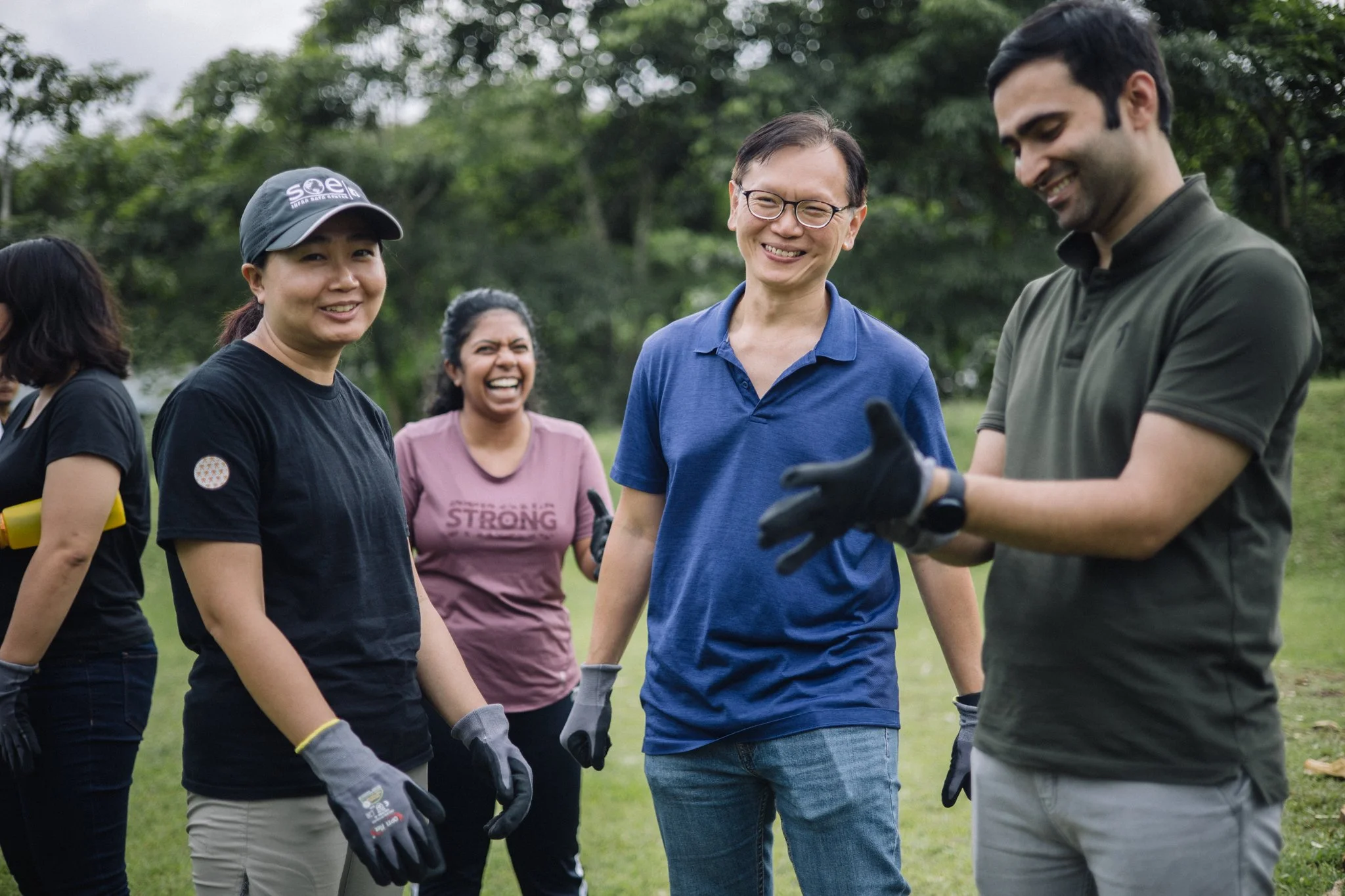
Gloves still on, nobody rushing for the bus. The ones who dreaded this most were the last to stop talking about it.
FAQ
-
Yes. This is the group the format is built for. Tasks are selected so that patience, technique, observation and coordination matter as much as physical effort, and every station has more than one way to be useful. First-timers are the norm on our corporate programmes, not the exception.
-
We design around the edges of the group rather than its average, and we avoid formats where speed or strength decides the outcome. Stations run in parallel with multiple entry points, so a participant can move between a physical role, a technical role and a coordinating role without it being announced or negotiated in front of everyone.
-
No. All technical equipment is provided and every tool station is briefed and supervised. Participants only need comfortable clothing, covered shoes, water and sun protection.
-
Tool stations are run with a fixed safety brief, controlled working areas, defined swing and cut zones, and facilitator supervision throughout. Technique is taught before load, and participants progress at their own pace. Nobody is pushed into a task they are not ready for.
-
Programmes are built around shaded rest points, water, and session lengths that account for Singapore humidity. Wet weather contingencies and sheltered alternatives are planned in advance, and we brief your organiser on the decision points before the day.
-
Most corporate bonding days of this type run as a half day or full day. The format can be shortened or extended, and it can sit alongside an existing offsite, conference day or team meeting.
-
Yes, and this is where the format earns its value. If the real objective is getting two functions to communicate, surfacing quieter contributors, or resetting a team after a restructure, tell us and we will build the stations and debrief around that.
-
Send us your group size, preferred dates, the honest fitness and experience spread, and what you want to be different afterwards. We will come back with a suggested format.
Planning A Team Bonding Day For A Team That Is Not Outdoorsy?
If your group has a wide fitness range, a lot of first-timers, or a few people who are quietly dreading the whole idea, that is a design brief rather than a problem. It is also the situation where a well-built outdoor programme tends to produce the biggest change in how a team sees itself.
Tell us what you are working with and we will design the format around it: group size, available duration, team profile, fitness range, outdoor experience, the objectives for the day, and any mobility or comfort considerations in the group.
Have a look at our corporate team building programmes in Singapore, or get in touch and we will shape an outdoor format around your group rather than the other way round.
Related Corporate Stories