Real Tools, Real Fire, Real Family Time: A Private Bushcraft Day on Pulau Ubin
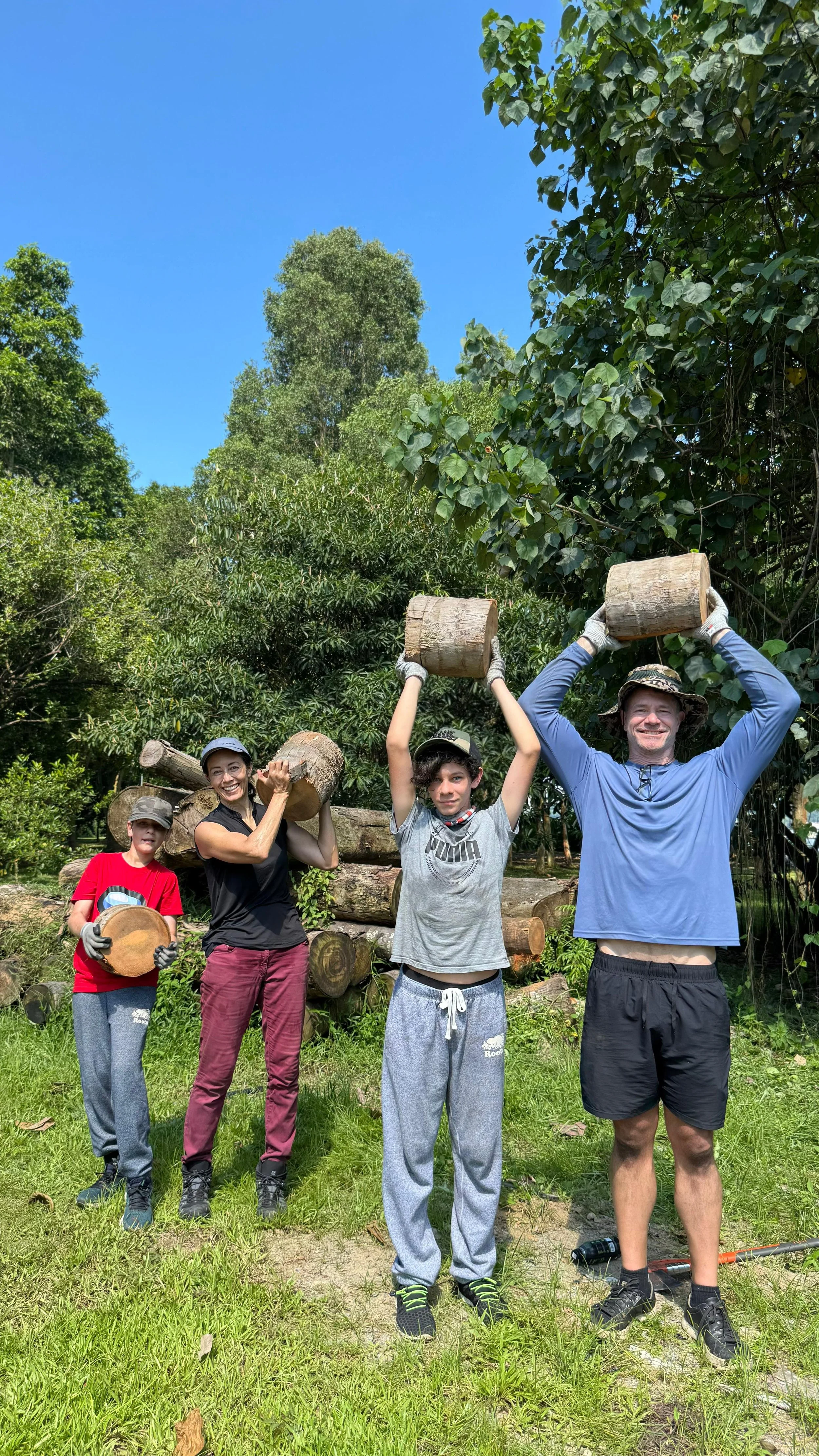
Fresh cut rounds are roughly half water by weight, which is why they feel heavier than they look. Four people, four logs, and nobody willing to be the first to put one down.
By the time lunch went on the fire, everyone had earned it.
Dad had spent part of the afternoon on the ground drilling through timber by hand. Mum had been working through a log with a saw. The kids had cut wood, prepared material for the fire, worked through smoke and stubborn embers, and discovered quite quickly that a fire does not care how badly you want it to light.
Nobody was watching from the sidelines.
That was exactly the point.
When this international family came to us for a private outdoor experience in Singapore, we were not interested in pulling a standard children's programme off the shelf.
We wanted to understand the family first.
What were the kids comfortable doing? How much outdoor experience did they already have? What did the parents want them exposed to? Did they want something playful, something challenging, something practical, or simply a day that felt completely different from the usual weekend in Singapore?
From there, we built the experience around them.
That is increasingly how we approach our private family adventures at Beyond Expeditions.
The activities are important.
But the family comes first.
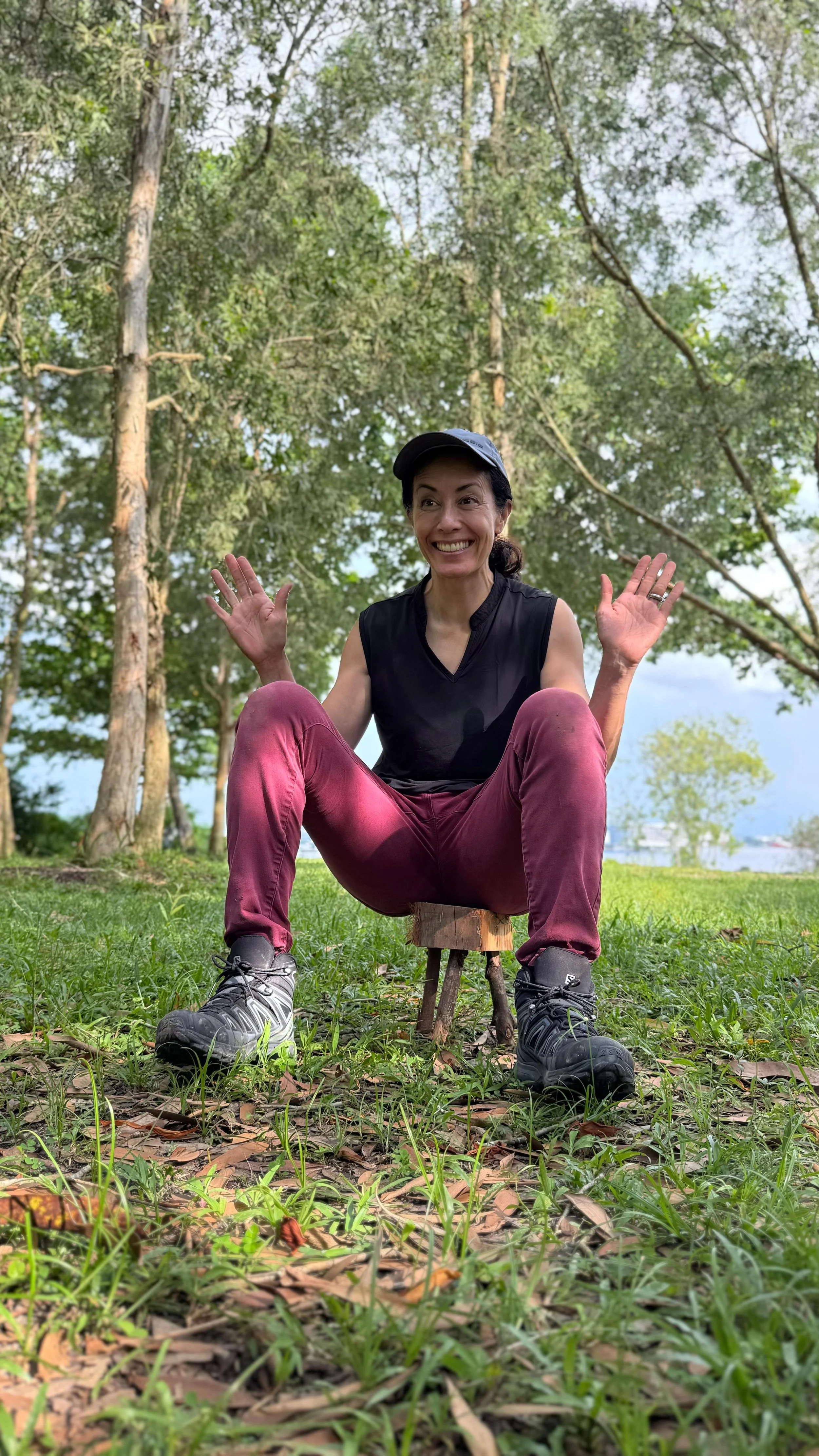
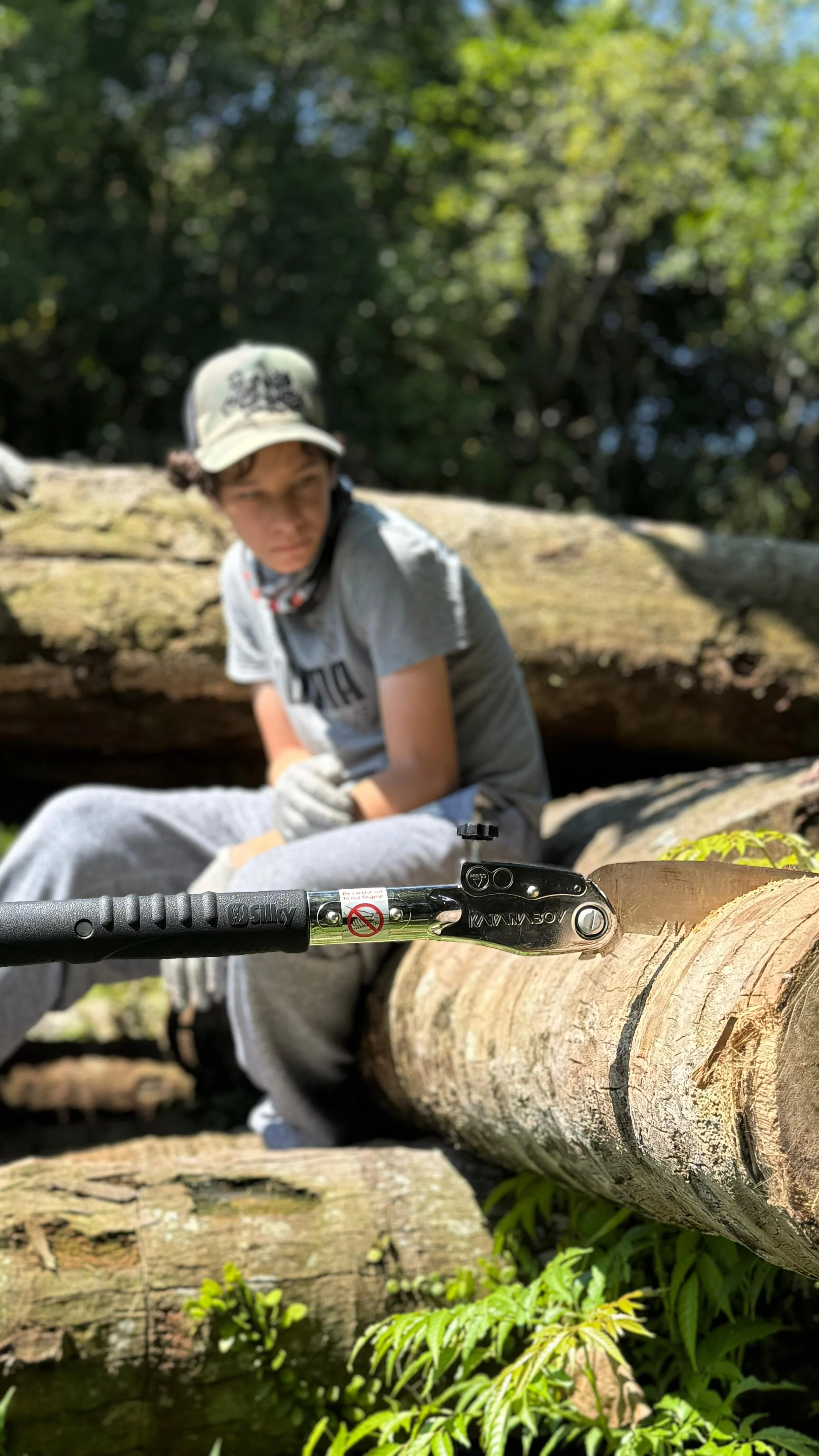
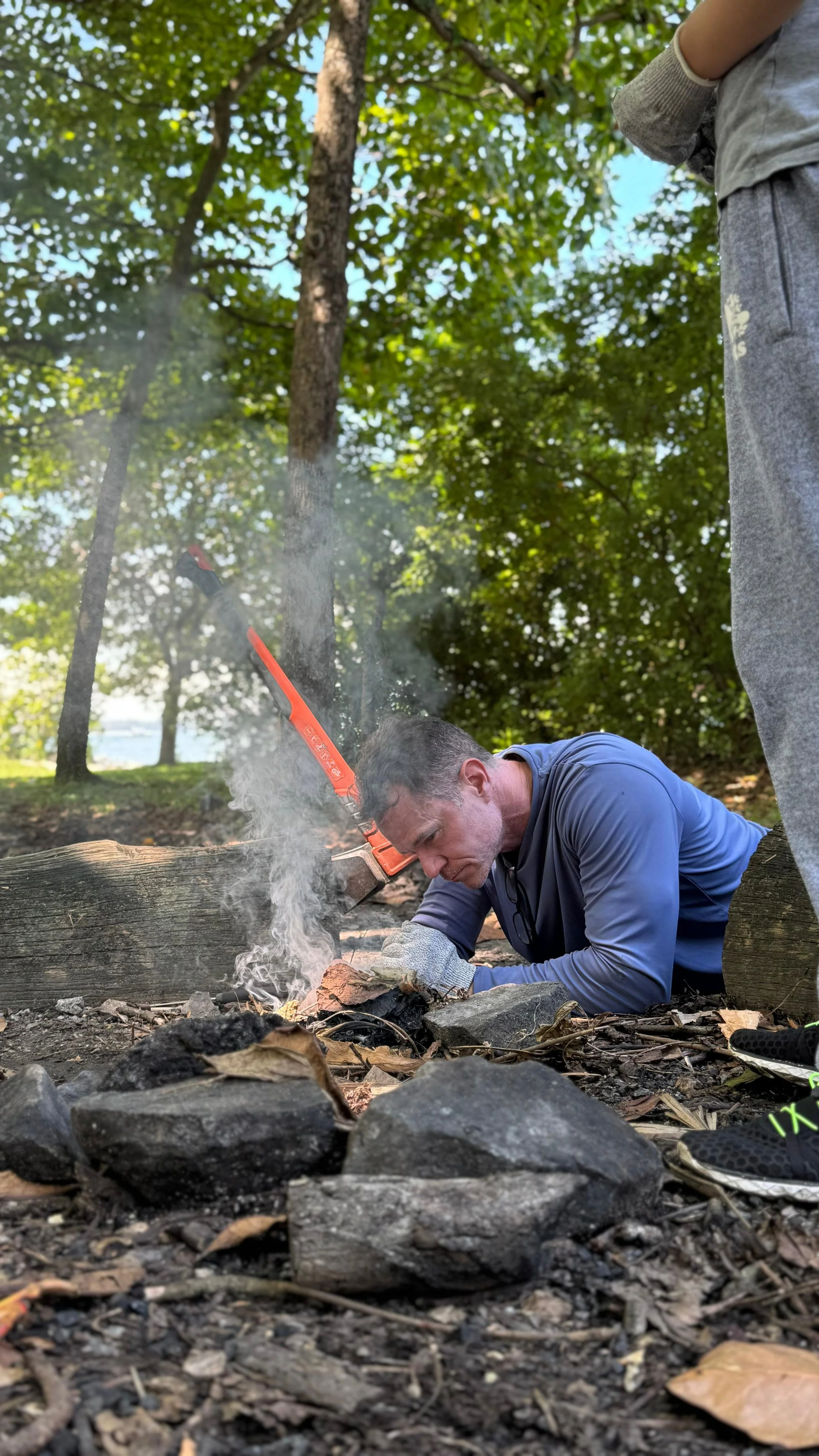
Everyone claimed a station that morning: splitting, sawing, and one very determined attempt at fire. Dad got the smoke, and the smoke taught him to blow low and slow at the base rather than hard at the top.
A Private Family Adventure Should Start With the Family
There is a big difference between booking a class and having an experience designed around you.
Our public survival workshops have a progression and syllabus because participants are learning a particular set of skills.
Private family experiences give us much more room to curate.
One family may arrive with younger children who have never spent much time outdoors.
Another may have teenagers who already camp, hike or want something more demanding.
Some parents want their children to become more comfortable around nature.
Others are looking for a meaningful family experience, exposure to practical skills, a bit more independence, or simply something that their kids have probably never tried before.
Those differences matter.
Rather than forcing every family through the same list of stations, we can adjust the activities, depth, pace and level of responsibility.
For this family, that meant getting properly hands-on.
Real Tools Change the Way Kids Show Up
There is something immediately different about putting a real task in front of someone.
A piece of timber needs to be cut.
A hole needs to be drilled.
Wood has to be prepared.
A fire eventually has to work.
There is no button that completes the job for you.
With instruction, supervision and a progression appropriate to the participant, traditional bushcraft tools can turn an ordinary activity into something that suddenly requires attention, patience and responsibility.
The objective is not to make something dangerous for the sake of excitement.
It is the opposite.
It is learning that tools deserve respect, that technique matters and that rushing usually makes the job harder.
For the kids, that meant learning by doing.
For Mum and Dad, it meant finding out very quickly that this was not going to be an afternoon spent watching from a comfortable distance.
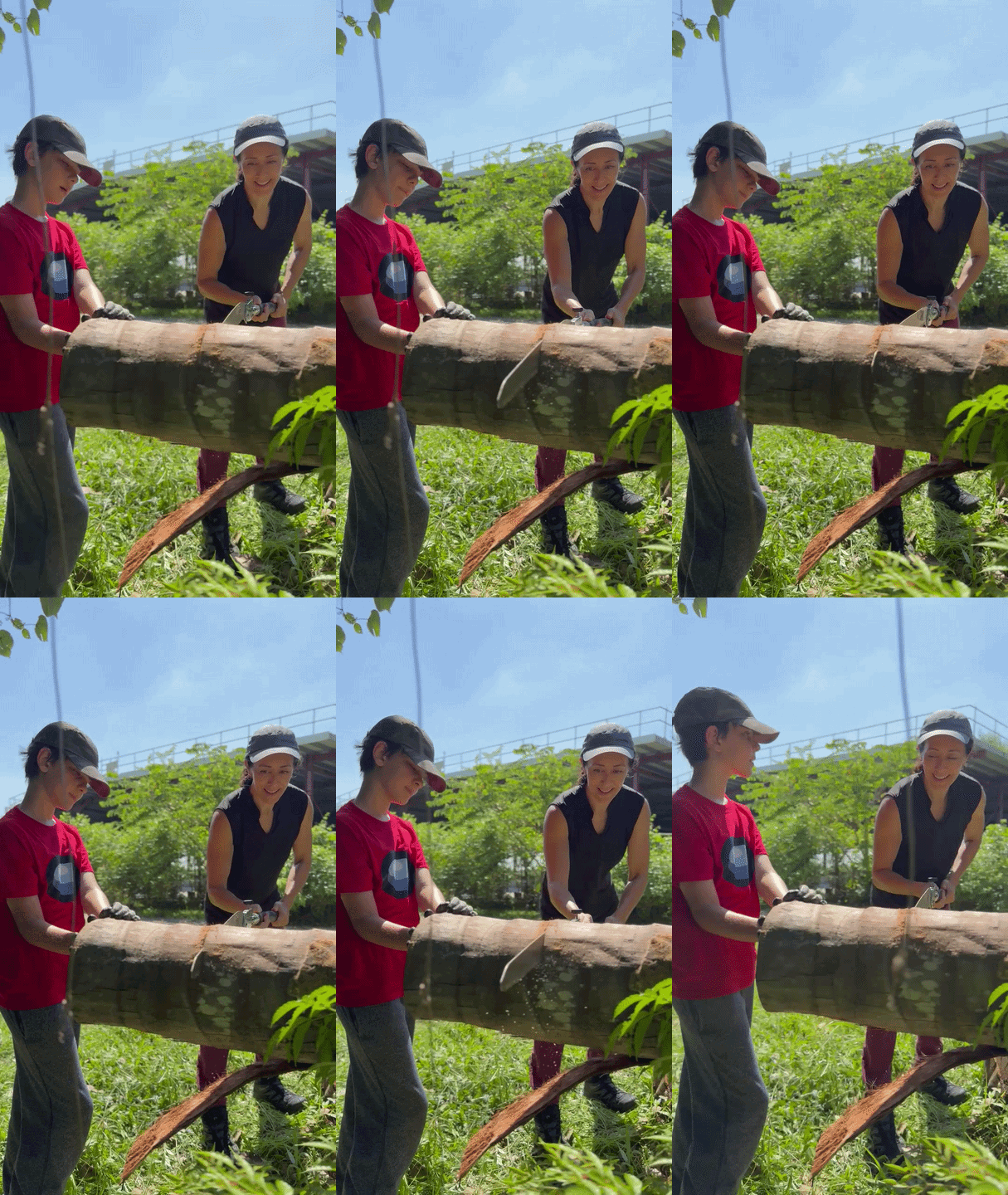
Mum said she would just watch the first bit. Four minutes later she was learning the actual trick, which is long relaxed strokes and no pushing, because a saw cuts under its own weight.
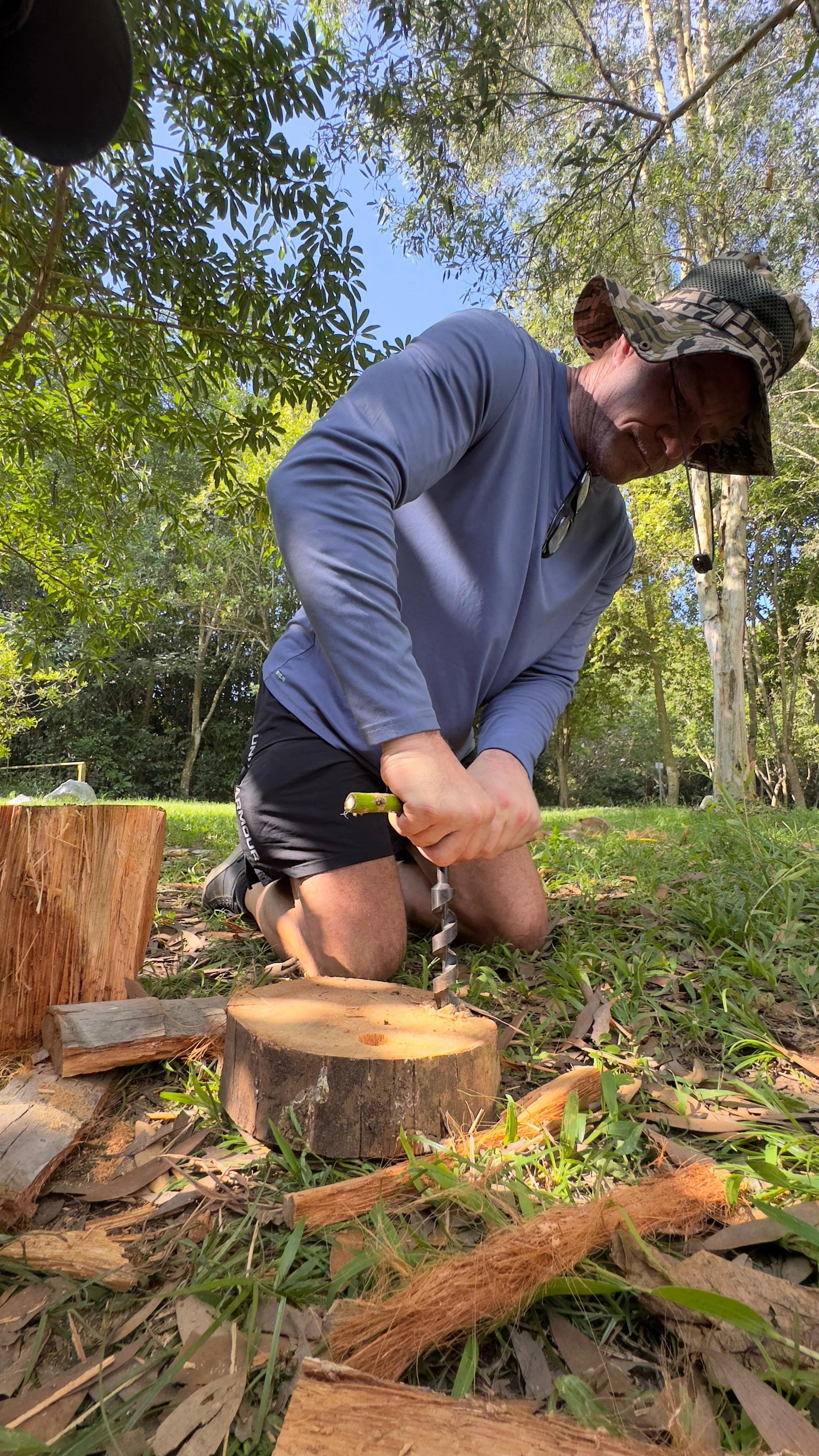
Put a hole in the right place and a log becomes a stool, a pot hanger or a stove. Dad turned that auger long enough to develop very strong feelings about cordless drills.
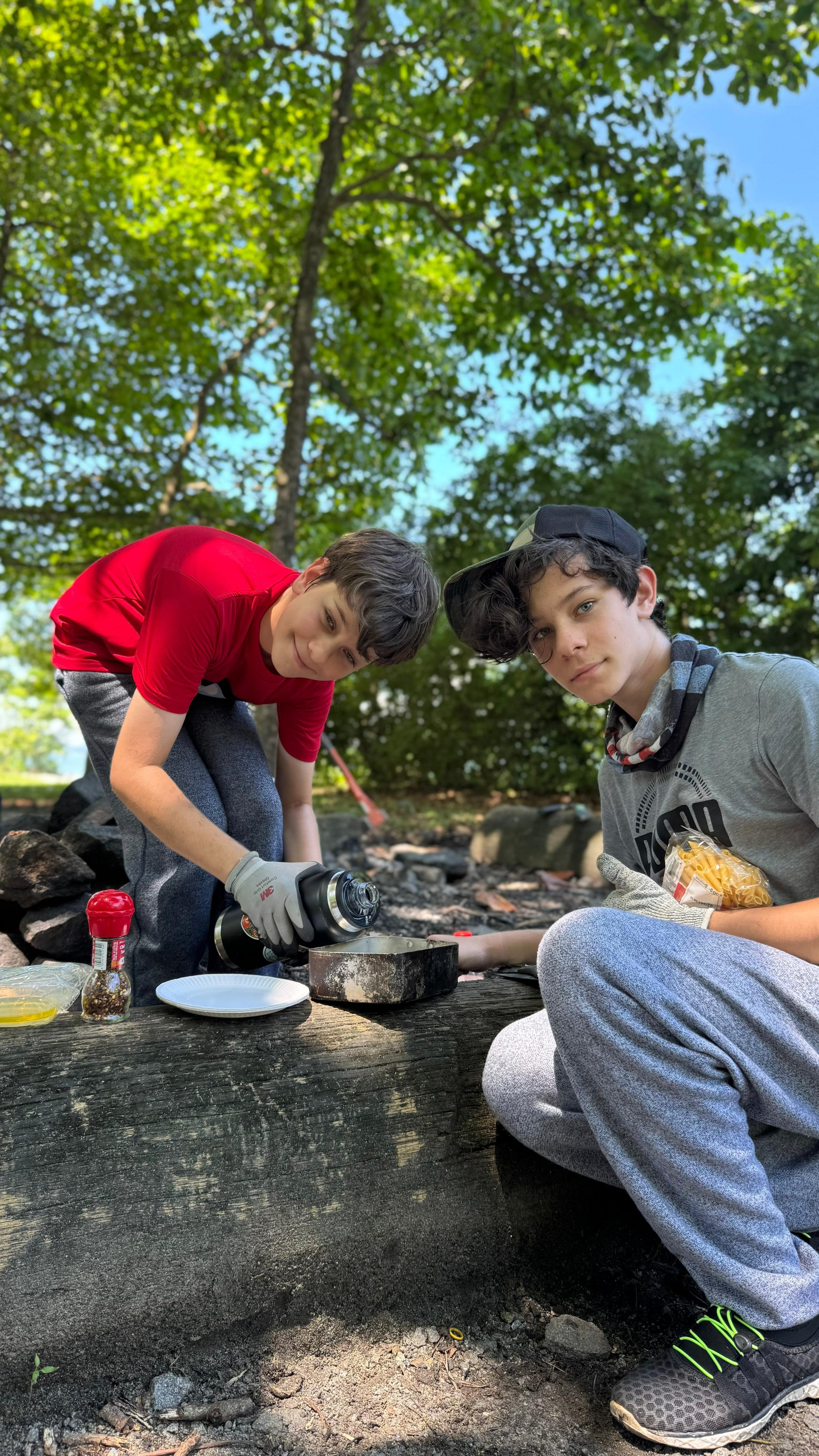
Lunch was entirely their department. First thing they worked out: cook over glowing embers rather than flames, unless everybody enjoys the flavour of charcoal.
Fire Is Simple Until You Have to Make It Yourself
Fire-making looks wonderfully straightforward when someone experienced demonstrates it.
Prepare the material.
Make a spark.
Feed the flame.
Done.
Then you try it yourself.
Suddenly the tinder is not quite right. The spark lands in the wrong place. The tiny flame disappears. Somebody adds too much material. Somebody else blows too hard.
And that is where the interesting part begins.
A survival skill becomes a problem to solve.
What is dry enough?
What catches first?
What should be added next?
When does the fire need air, and when does it need to be left alone?
There is no need for us to turn every moment into a lecture.
The feedback is happening right in front of you.
Either the fire grows or it does not.
So everyone adjusts, tries again and keeps going.
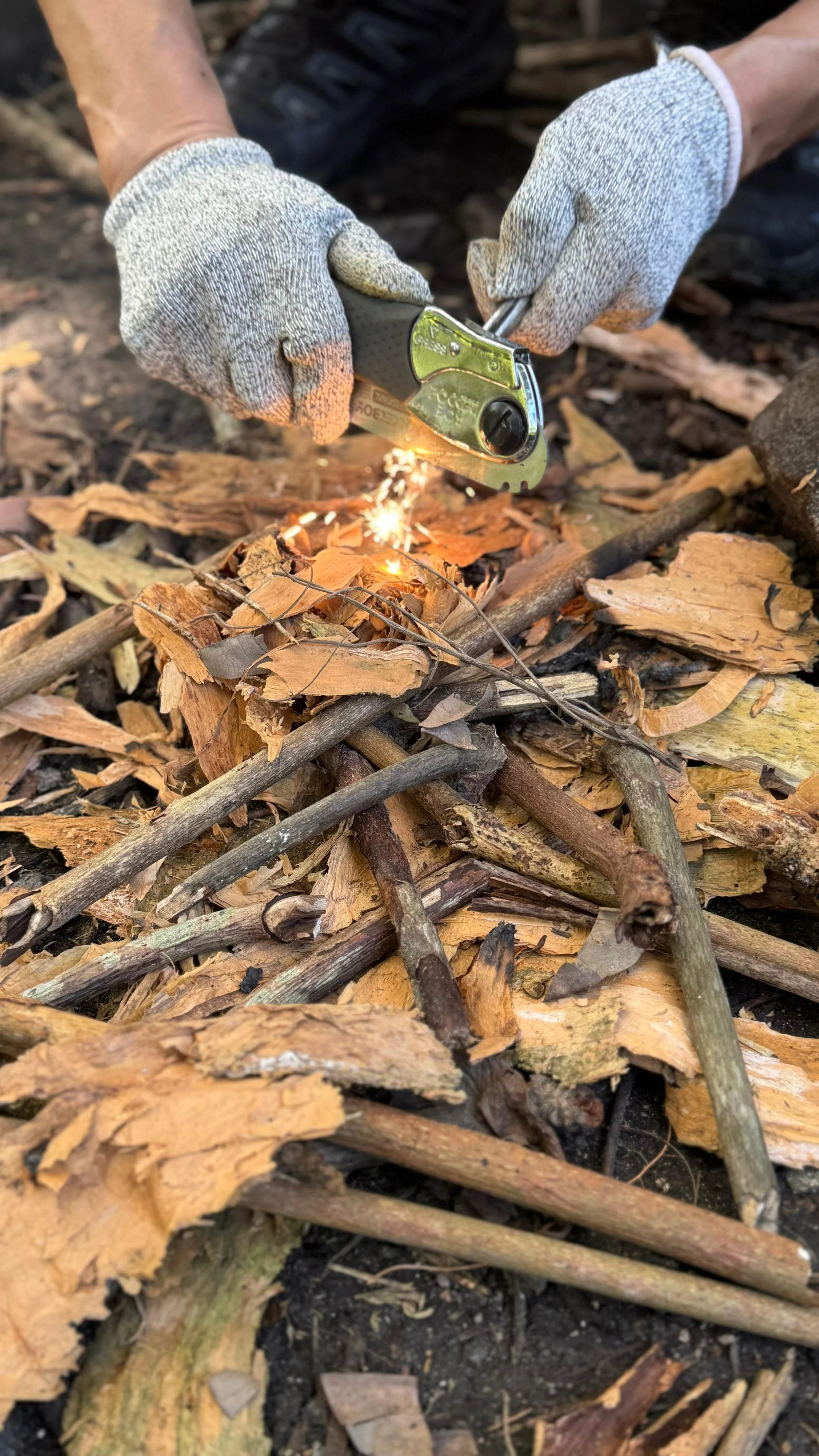
A ferro rod throws sparks at around three thousand degrees and is still completely useless if the tinder is damp or too chunky. Sparks are the easy part. The dry fluffy nest underneath is the actual homework.
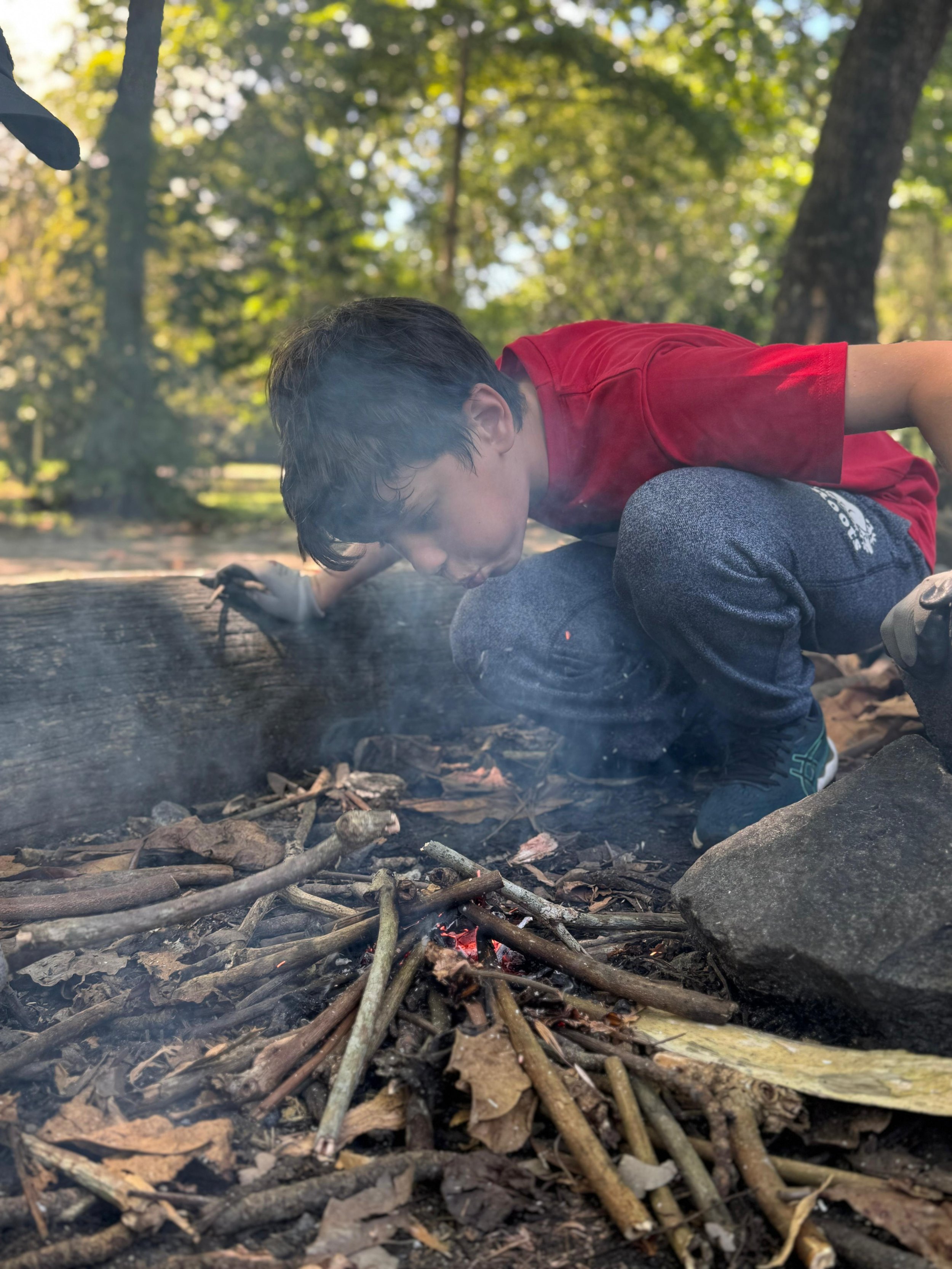
Long steady breaths, not panicked puffing. An ember wants oxygen delivered gently and consistently, and he had decided this one was not allowed to give up.
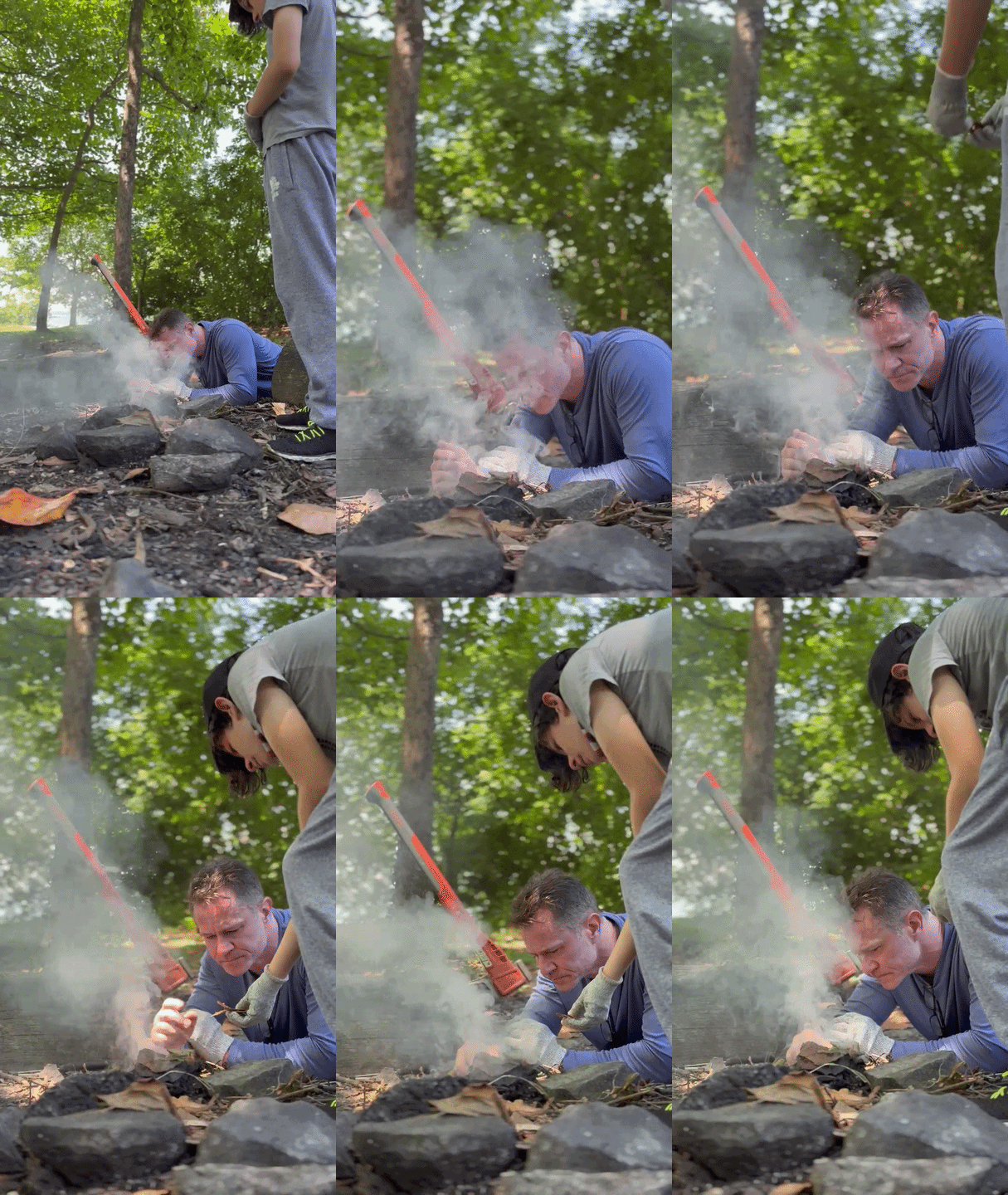
Smoke that thick usually means the fire wants air from underneath, not more lung power from above. Dad discovered that fire making looks a great deal easier when somebody else is doing it.
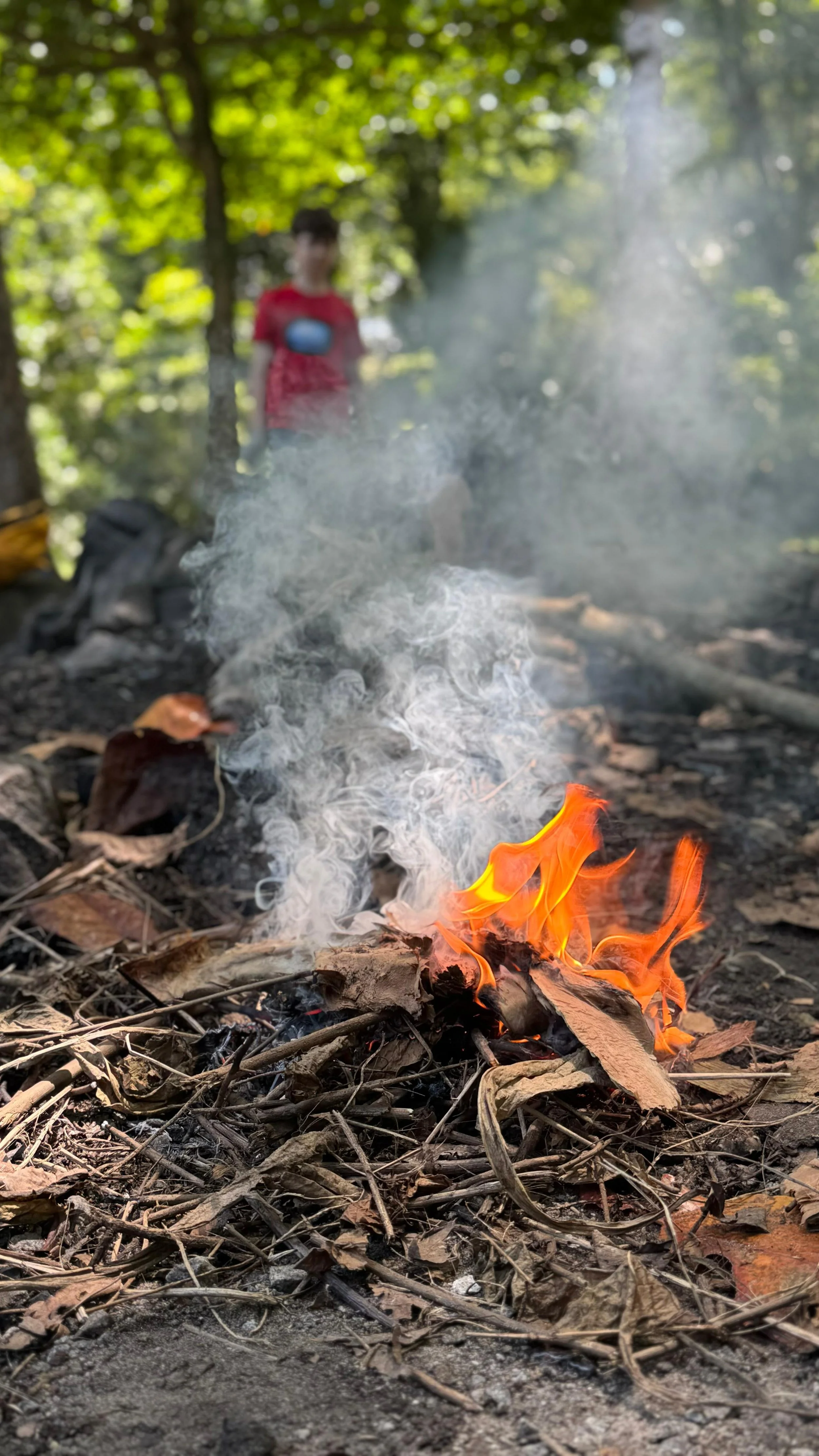
Thick white smoke is mostly moisture leaving the wood, and when it thins out you know you have won. Nobody was crying at this point. It was purely the smoke.
Then Lunch Depends on It
This is one of our favourite transitions in a survival day.
The fire stops being an activity.
It becomes useful.
Water comes out. Mess tins appear. Food needs to be prepared. Heat has to be managed.
Suddenly keeping that fire alive feels a little more important.
There is something satisfying about that full circle.
You worked with the wood.
You prepared the material.
You made the fire.
Now the same fire is doing something for you.
Outdoor cooking does not need to be complicated to be memorable.
Sometimes the best part is simply knowing that the meal in front of you exists because everyone contributed somewhere along the way.
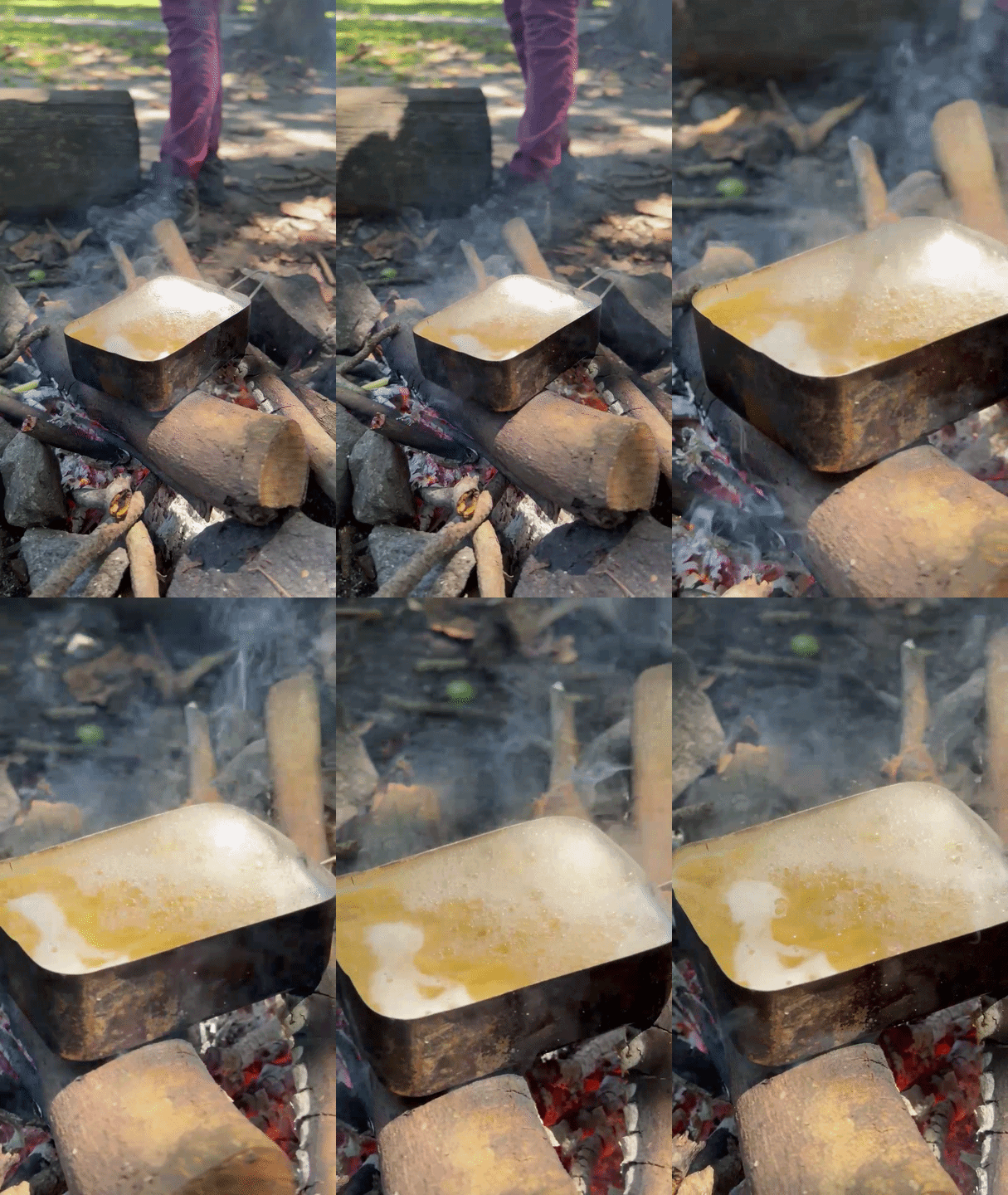
The fire stopped being a lesson the moment lunch landed on it. A mess tin is pot, pan and plate in one, which is brilliant right up until somebody has to wash it.
Parents Do Not Get a Spectator Pass
This may be one of the biggest differences between the kind of private family experience we enjoy creating and a conventional activity that parents book for their children.
Mum and Dad are part of it.
They saw.
They drill.
They work on the fire.
They get smoky.
They occasionally discover that their children are handling a challenge better than they are.
And everyone gets something to laugh about later.
We think that matters.
Children already have plenty of activities where adults drop them off, sit nearby or watch from the side.
There is a different energy when the whole family has a job to do.
Nobody needs to manufacture a bonding exercise.
The shared task does the work for us.
Someone needs help.
Someone figures something out.
Someone gets frustrated.
Someone finally gets the fire going.
Those are the moments people tend to remember.
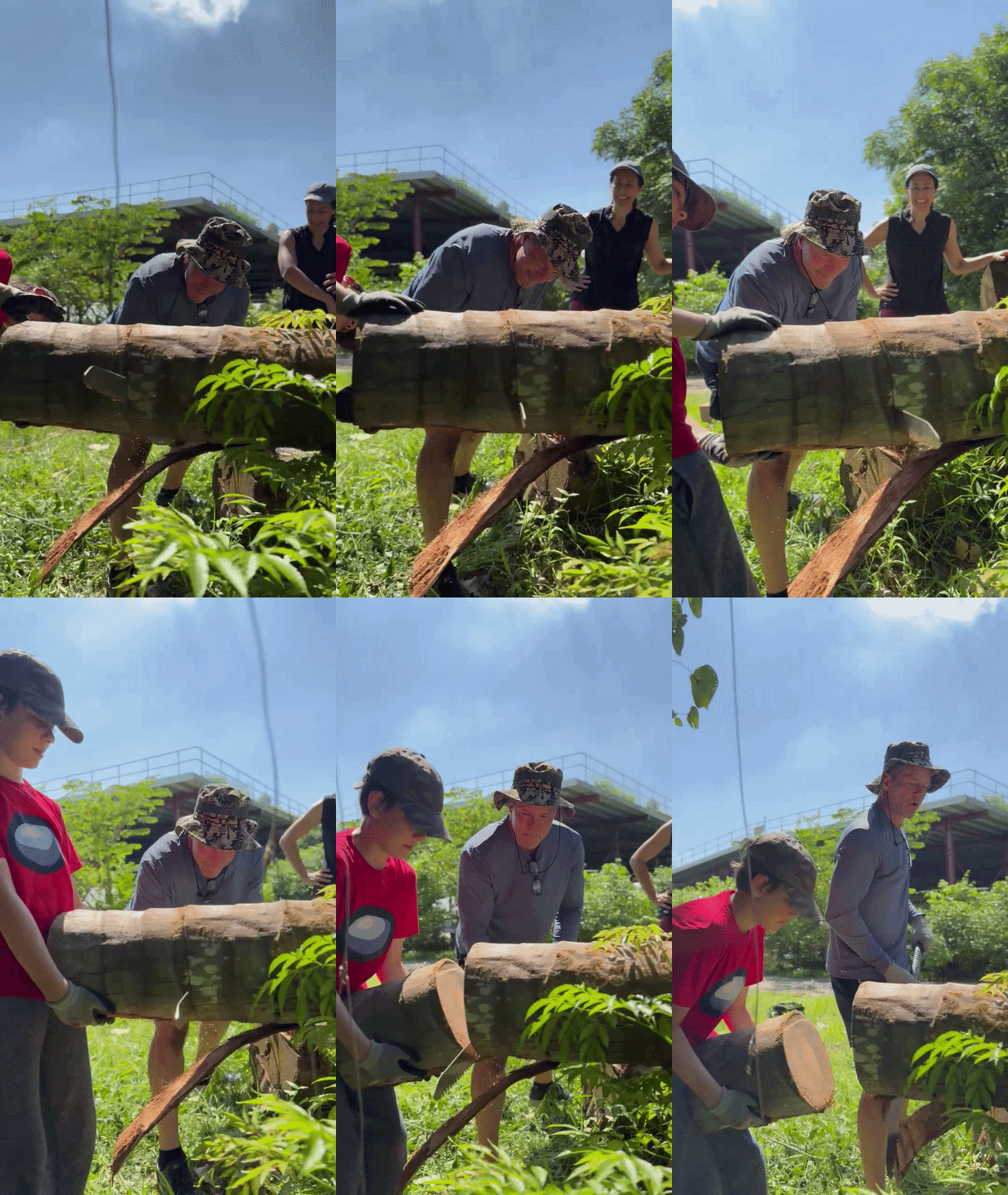
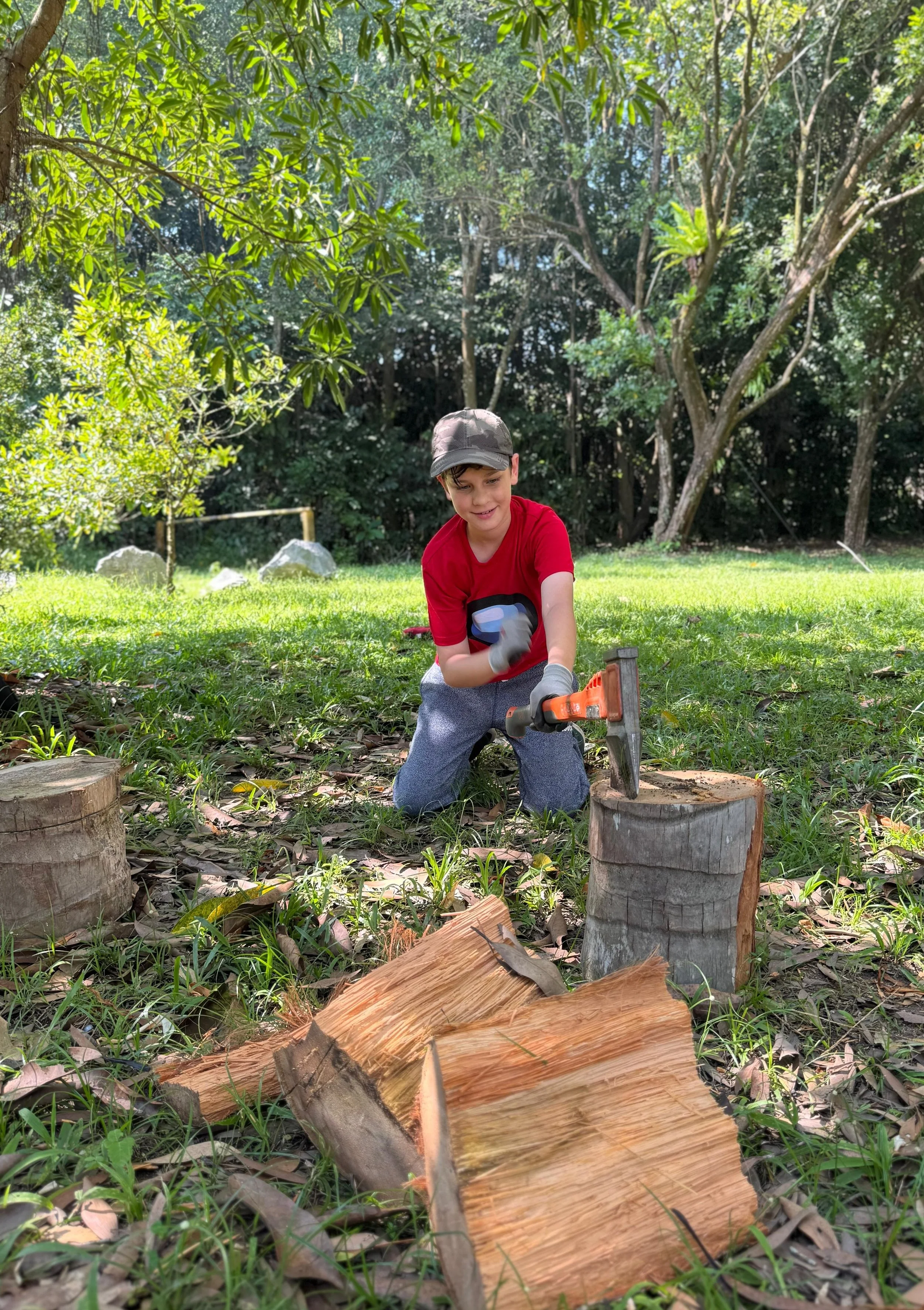
Father and son, one very large log, and a short but passionate debate about technique. Keeping the blade straight and the cut open matters far more than brute strength, which nobody wanted to hear.
What Kids Take Home Is Bigger Than Any One Survival Skill
We love bushcraft, but the objective of a private family day is not to turn a child into a survival expert in a few hours.
It is exposure.
Trying something unfamiliar.
Learning how a tool feels in your hands.
Finding out that getting something wrong the first time does not mean the activity is over.
Realising that patience often works better than force.
Seeing Mum or Dad struggle with the same task.
Contributing to something the entire family is working towards.
The saw, fire and woodcraft are simply the medium.
The more interesting part is the experience around them.
And because every family is different, the same activity can mean something completely different to another group.
What If Your Kids Have Outgrown Typical Kids Activities?
This is something we hear increasingly from parents.
Their children are too old for the usual children's activities, but many adult outdoor experiences are either not suitable for them or simply are not designed with families in mind.
That middle ground can be difficult.
Bushcraft works particularly well because the activity itself does not have to become childish.
A fire is still a fire.
Wood still needs to be cut.
A knot still needs to hold.
A shelter still needs to work.
A meal still needs to be cooked.
What changes is the level of responsibility, technical depth, pace and instruction.
That gives us room to make an experience accessible for a newcomer while still giving a more confident older child or teenager something meaningful to work on.
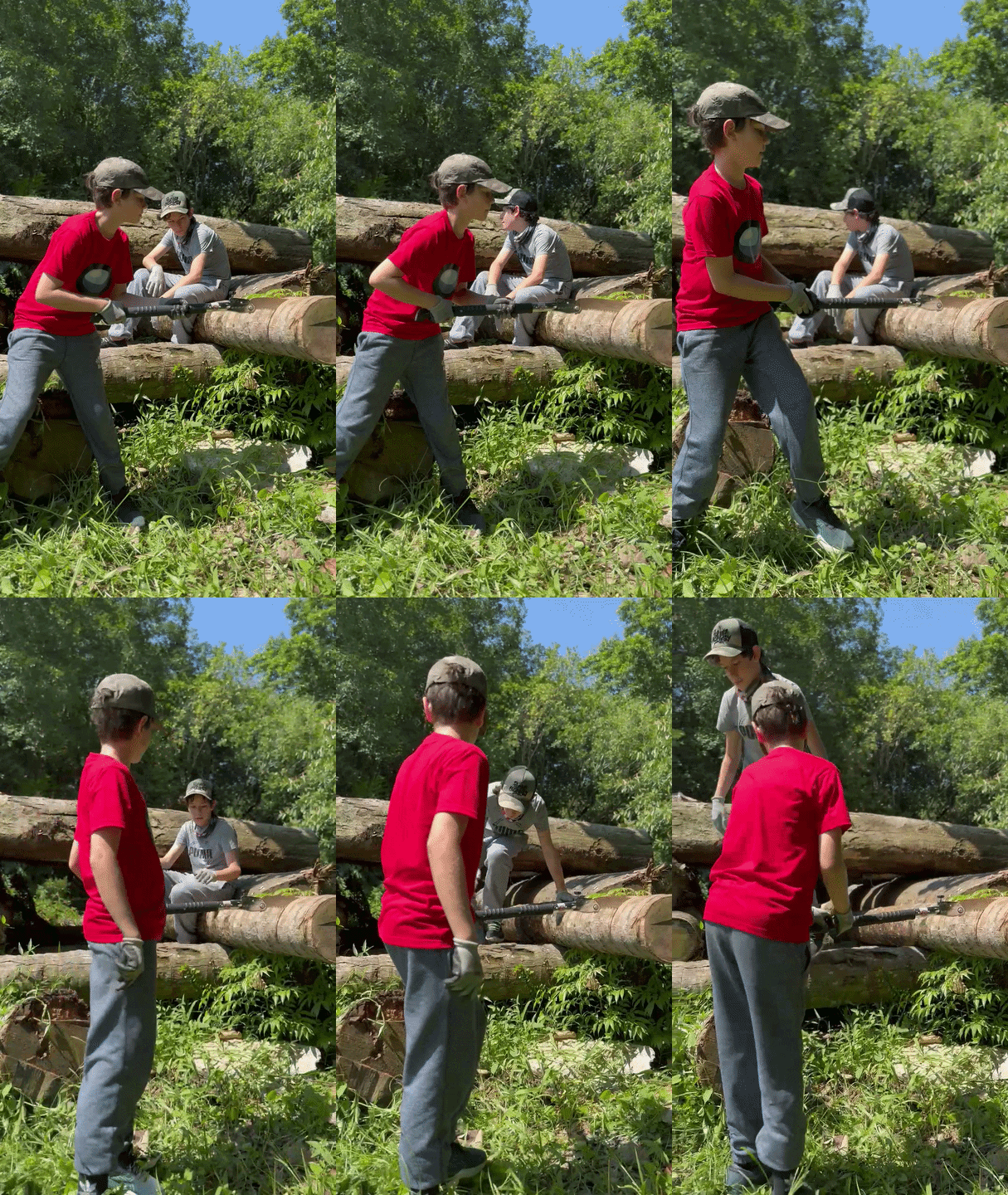
One sawing, one pinning the log dead still. Half of cutting well is simply stopping the wood from moving, and they sorted that out between themselves without a word from us.
Why Pulau Ubin?
Pulau Ubin gives us something that is increasingly difficult to manufacture in the city.
Space.
Trees.
Dirt.
Heat.
Natural material.
A little unpredictability.
And enough separation from normal routines that people tend to settle into the experience surprisingly quickly.
Many families know Ubin for cycling, nature walks and exploring the island.
Those are great ways to experience it.
A private bushcraft day offers another possibility.
Instead of simply visiting the environment, you spend time working within it.
You collect.
Cut.
Build.
Light.
Cook.
Solve.
You come home having done something there.
For visiting families, it can also reveal a side of Singapore that feels very different from the usual city itinerary.
No Two Family Programmes Need to Look the Same
This is probably the most important thing to understand about how we now approach private family experiences.
There is no single perfect family survival programme.
A family with younger children may need more play, shorter challenges and simpler tasks.
A family with older kids may want more independence, more technical skills or more responsibility.
Some parents may specifically want fire-making.
Another family may be excited by shelter-building, knots, outdoor cooking, navigation or practical bushcraft.
Others simply tell us:
“We want the kids outside doing something real.”
That is enough for us to start a conversation.
We will ask about the family, what everyone has done before, what the children are like, what the parents are hoping to get out of the experience and what kind of challenge feels appropriate.
Then we curate from there.
If you want to see another example, read our previous private family adventure: Three Kids, One Fire, No Screens.
You can also explore our wider range of survival workshops in Singapore.
Planning a Private Family Adventure in Singapore?
You do not need to know exactly which survival skills your family should try before contacting us.
That is our job.
Tell us who is coming.
Tell us roughly how old the children are.
Tell us what they have done before.
Tell us what they love, what they might be nervous about, and what you would love them to experience.
Then we can start designing something that actually fits.
It might involve fire.
It might involve tools.
It might involve food, shelters, knots, navigation or a combination of completely different skills.
The objective is not to squeeze your family into our programme.
It is to build the right adventure around yours.
Private Family Survival Workshop FAQs
-
Yes. Private family experiences are curated according to the children’s ages, previous outdoor experience, confidence levels, interests and what the parents hope the family will get from the day. The activities, technical depth, pace and level of responsibility can therefore vary from one family to another.
-
They can, and we strongly encourage it. Our private family experiences work especially well when parents and children tackle the activities together rather than the adults simply watching from the side.
-
No. Previous experience is not necessary. We can start with complete beginners and adjust the progression according to how comfortable and confident each participant becomes during the experience.
-
Depending on the programme, participant and level of readiness, real outdoor tools may form part of the experience. Activities are introduced with instruction, supervision and an age-appropriate progression rather than giving every participant the same task regardless of ability.
-
Depending on the family and programme design, experiences may include fire-making, outdoor cooking, woodcraft, shelter-building, knots, navigation and other practical bushcraft or survival-inspired challenges. Not every family needs to do the same combination.
-
Pulau Ubin is one of our favourite settings for private family bushcraft and survival experiences because it gives families space to spend meaningful time outdoors and work with practical skills in a natural environment. The final location and programme depend on the experience being designed.
-
Yes. Private programmes can be a great option for families visiting Singapore who want something more hands-on and outdoors than a conventional sightseeing itinerary. Share your available dates, family profile and interests with us and we can advise what may be suitable.
-
Start by telling us who will be taking part, the approximate ages of the children, their previous outdoor experience and what you would like the family to get from the day. From there, Beyond Expeditions can recommend a programme direction rather than requiring you to choose from a rigid activity list.
Sometimes the best family stories begin with a little smoke, a few tools and no idea whether the fire is actually going to cooperate.
Ready to Build Your Family’s Adventure?
You do not need to know whether your kids should try fire-making, woodcraft, shelter-building or outdoor cooking before you contact us.
Tell us about your family first.
Who is coming? How old are the kids? What are they into? What have they tried before? Is there something you would love them to experience, or something they have never had the opportunity to do?
We will take it from there.
There is no standard family package to squeeze you into. We use what you share with us to recommend a direction that fits your children, their confidence, your family dynamic and the kind of day you want to have together.
Sometimes parents come to us with a very specific idea. Sometimes the brief is simply, “We want the kids outside doing something real.” Both are perfectly good places to start.
We’ll review what you’ve shared and come back with a suggested direction for your family.
Where Families Go Next
Pulau Ubin is where a lot of families begin. It does not have to be where they stop.
Sometimes a few hours making fire, working with real tools and watching your child handle something completely unfamiliar changes the question.
It stops being:
“What should we do with the kids this weekend?”
And starts becoming:
“Where could we take them next?”
Beyond Expeditions began with expeditions, and some of our favourite journeys over the years have involved parents choosing to take their children somewhere well outside the usual family-holiday script.
NORTH MONGOLIA
A 10-Year-Old, Reindeer Herders and North Mongolia
One Singaporean family took their 10-year-old son into northern Mongolia to meet the Tsaatan reindeer herders and experience a completely different way of living together.
For This Family, Mongolia Wasn’t Just About Reindeer →
FAMILY EXPEDITION
Seven Years Old. Mongolia. A Very Different Family Holiday.
Another family chose Mongolia with their seven-year-old daughter, trading the conventional family itinerary for nomadic encounters, animals, nature and the kind of stories that are difficult to manufacture inside a resort.
Parents Bring Their 7-Year-Old Daughter to Mongolia →
GO FURTHER
When Your Family Is Ready for Something Bigger
For some families, the next adventure is another afternoon in Singapore.
For others, it eventually becomes a steppe, a ger, a long road through Mongolia and a child discovering that the world is much bigger than the version they already know.
Explore Beyond Expeditions in Mongolia →
Start small. Go somewhere real. See what it wakes up in them.